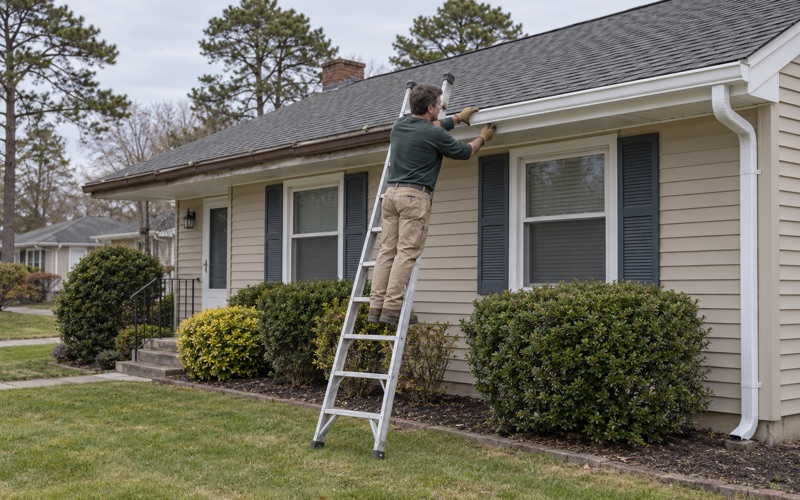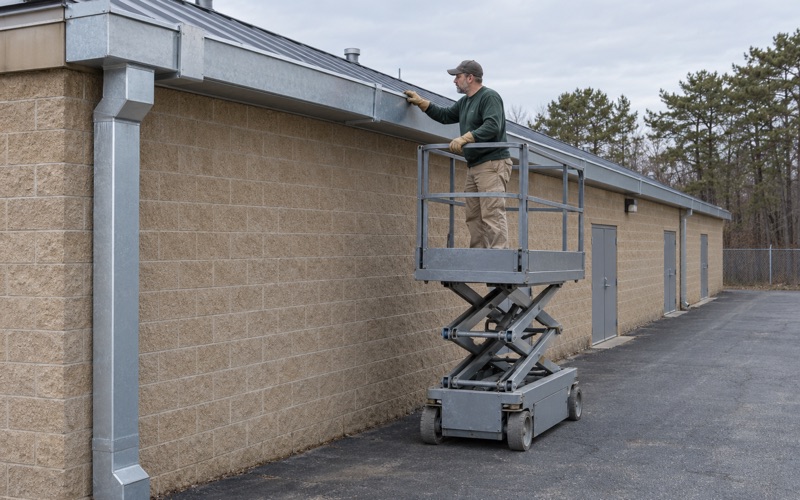
Brick Quality Gutters has spent more than 20 years on gutters in Wall, cleaning out clogged runs, repairing sagging sections and replacing systems that have reached the end of their life. Every estimate starts on the roof, not in the truck. We measure the area that drains toward each run and size the gutter and the downspout for that load instead of reaching for the same profile out of habit.
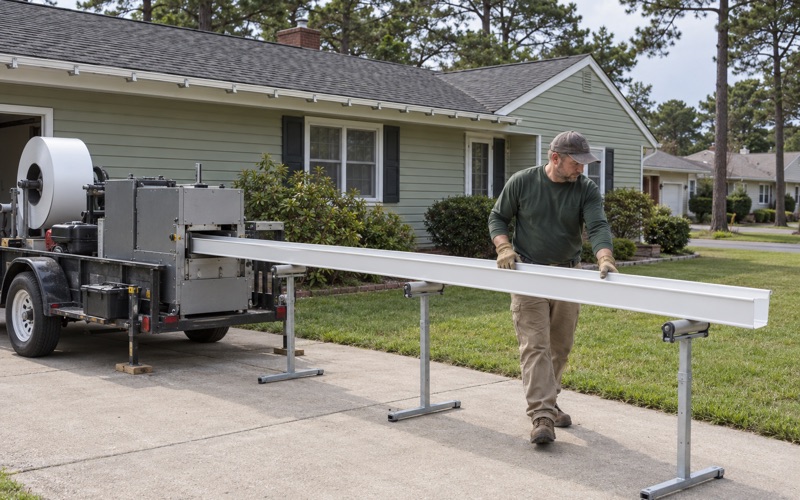
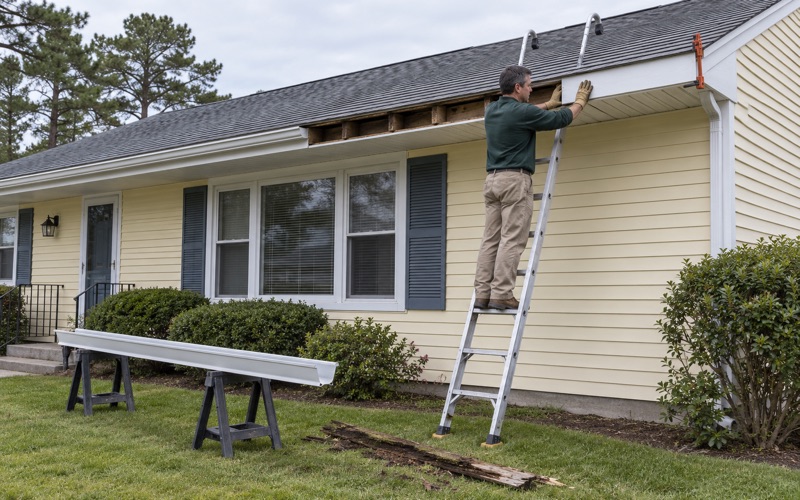
New gutters are formed on site from coil, so each run of the house comes off the machine as one seamless piece with no joints along its length. Before anything is hung, we check the fascia board that will carry it. When the wood behind an old gutter has gone soft, we show the owner the damaged section first and replace it only after they have seen it.
Fall is when most Wall homeowners call us, and it is also when the township has the most to say about what happens to the debris. The sections below cover the houses we work on, the way leaves from a gutter cleaning reach the curb, where downspout water is allowed to go, and how to choose between guards and seasonal cleaning.
Gutters on Wall’s Mid-Century Houses
A Township of Detached, Owner-Occupied Homes
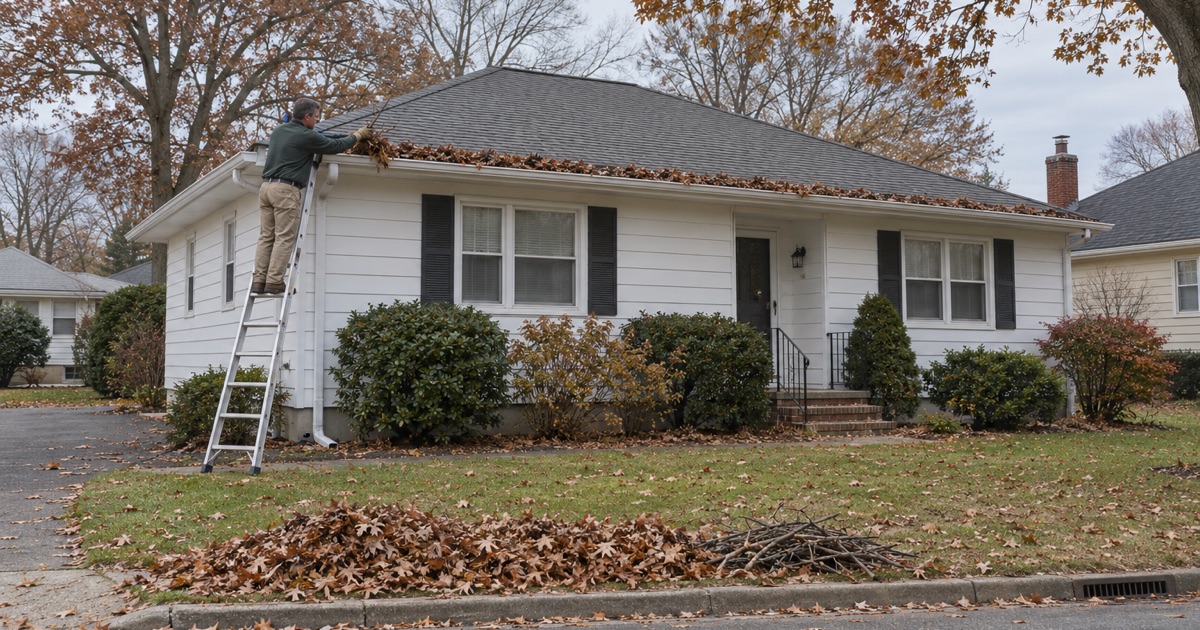
Wall Township is a place where most people own the house they live in and the house stands on its own lot. Census figures for the township count 8,406 one-unit detached homes out of 10,397 housing units, about 80.9%, and 83.4% of occupied homes are lived in by their owners. That means the gutter decisions here are usually made by the person who will live with them for years.
A deep share of that housing stock dates from the postwar decades. Wall has 2,464 houses built in the 1950s and 1960s, nearly a quarter of everything standing in the township, with another 805 from the 1940s. Many of those homes are on their second or third set of gutters, and some still carry sections that were patched rather than replaced the last time around.
Sizing a Run on an Older Roof
Houses from that era were often added onto over the decades, with a family room, a dormer or a garage roof feeding water into a gutter that was sized for the original house. We work out how much roof drains to each run before we recommend anything. On many jobs that leads to 6-inch K-style seamless gutters with 3x4 downspouts where the old system had a smaller profile.
The gutters themselves come from .032 aluminum gutter coil, formed in the driveway to the exact length of each wall. Corners are joined with box, strip or bay miters depending on the shape of the roofline, and outlets are cut as wide-flange outlets so water drops into the downspout instead of pooling. Hidden hangers replace the old spike and ferrule method, which tends to work loose as wood ages.
What Sits Behind the Old Gutter
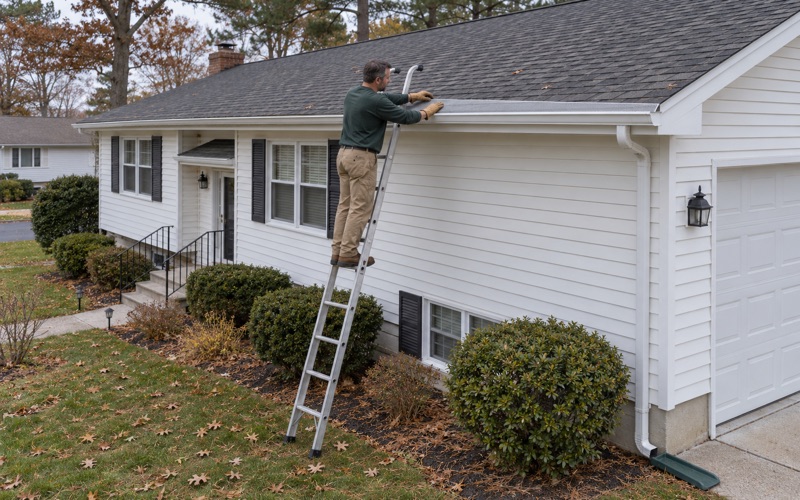
When we take down a gutter that has hung on a house for decades, the fascia behind it tells us how well it worked. Water that spilled over the back edge for years usually leaves soft, dark wood. We probe that board, show the owner any section that has given way, and replace it before the new gutter goes up.
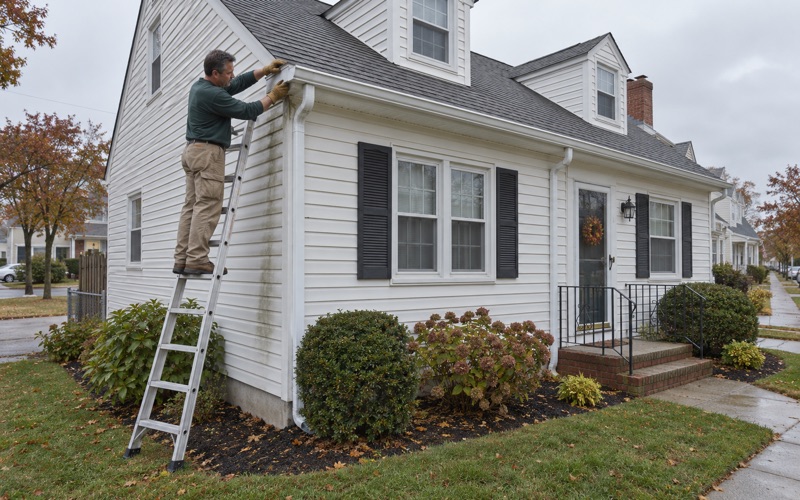
On houses built before 1978, painted fascia and trim can carry lead paint, so that work follows the EPA Renovation, Repair and Painting rule. We also check for a gutter apron and drip edge along the roof edge, and for kickout flashing where a lower roofline meets a wall. Missing flashing is one of the most common reasons a new gutter still leaves a stain on the siding.
Looking for gutters closer to Dover Beaches South? See Gutters Services in Dover Beaches South.
Fall Leaves, Full Gutters and Wall’s Collection Rules
Gutter Debris Is Leaves Under the Township’s Rule
What we pull from a Wall gutter in the fall is mostly leaves and the fine grit that settles under them. The township’s solid waste chapter, § 191-3, sets out how leaves are prepared for curbside collection by Township vehicles. It does not mention gutter cleanings by name, but our reading of the text is that leaves from a gutter are leaves like any other.
That reading matters because the rule is specific about how the pile has to look. Leaves have to be loosely piled in a neat and orderly fashion and kept free of vines, prunings and grass. Grass is a separate matter in Wall: it goes to the Township recycling center and may not be left loose on the sidewalk, in the street gutter or in the road.
Loose and Unbagged at the Curb
The line most people miss is short and direct: leaves in bags will not be collected. Our usual cleaning visit bags the debris so nothing is left on the lawn or in the street, and in most towns that is exactly what a homeowner wants. In Wall, a row of filled bags at the curb is the one thing the township truck is set up to pass by.
So on a Wall job we ask the owner how they want the debris handled before we start. We can add it, loose, to the leaf pile the household has already raked to the curb, or keep it bagged for the owner to take to a Township recycling facility, which the ordinance names as an alternative. Either way, nothing ends up scattered across the lawn.
Seven Days and Ten Feet From the Storm Drain
Timing and placement are written into the same section. Yard waste that is not containerized may only be swept, raked or blown to the curb during the seven days before a scheduled and announced collection. The Township designates and announces those dates, so we check with the owner about the next pickup rather than guessing at one.
The pile also has to stay at least 10 feet from any storm drain inlet. Gutter debris is heavy with grit and breaks down quickly once it is wet, which is exactly the material an inlet is meant to keep out of the storm system. When we set debris out, we pace off the distance from the nearest inlet and keep the pile well back from it.
Branches Off the Roofline and Where the Water Goes
Limbs and Leaves Go in Separate Piles
Many fall visits include cutting back small branches that rest on the roof edge or hang over a run. Wall treats those as a different kind of waste. Under § 191-3, tree branches and hedge clippings have to be cut to a maximum length of four feet and stacked in a pile no larger than 3.5 cubic yards, roughly 4 by 3 by 8 feet.
The same paragraph says no viney material, prunings or leaves may be mixed with branches. On a house where limbs have been cut back from the roofline before we clean the gutter beneath them, that means two piles at the curb, not one. The cut wood stays stacked on its own and the gutter leaves loose in theirs, so each pile matches the rule written for it.
Downspouts Stay Off the Township Sewer
Wall’s sewer code, § 222-39, bars roof leaders and downspouts from being connected to the sanitary sewer, along with cellar drains, area drains and sump pumps. On older houses we sometimes find a downspout that disappears into the ground with no clear outlet. Before we tie a new downspout into an existing underground line, we want to know where that line actually runs.
If a buried line cannot be traced, we would rather route the water somewhere visible than reconnect to something unknown. A downspout feeding the sanitary sewer is not something a homeowner should inherit with a new gutter system. We point out anything that looks like an old connection and recommend a surface or yard outlet in its place.
Following Each Downspout to Where It Lands
A clean gutter only helps if the water leaves the house once it reaches the ground. We follow every downspout to the point where its water lands. The residential code calls for the grade to fall 6 inches within the first 10 feet from the foundation, and a downspout that empties against the wall works against that slope.
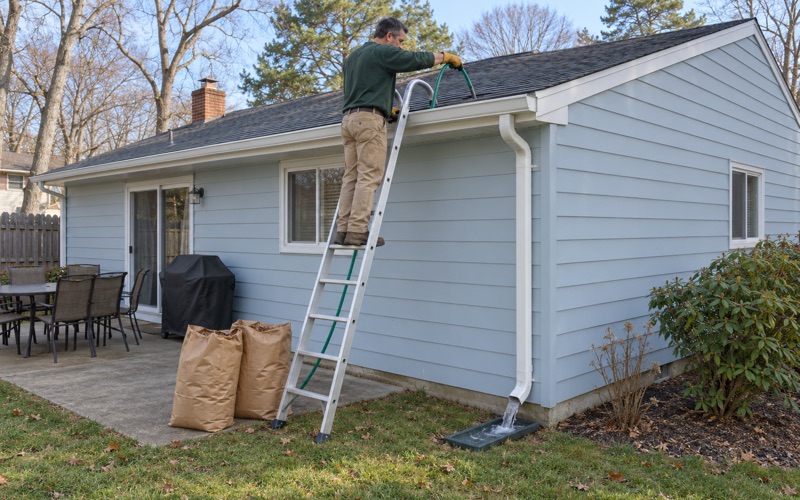
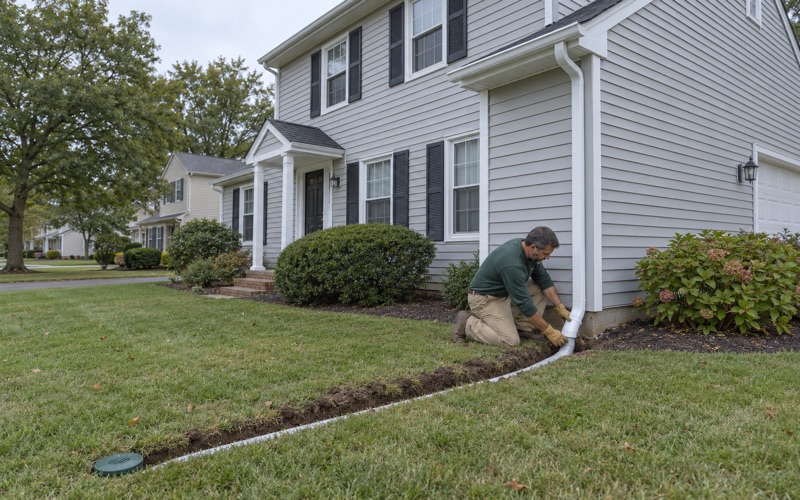
Where water lands too close, we propose a fix and price it on the estimate. That may be a simple extension, or an underground downspout line that carries water across the yard to a pop-up drainage emitter. During a cleaning visit, we flush every downspout as well, since a clog at an elbow can back water up into a gutter that looks clear from the ground.
Guards or Seasonal Cleaning for a Wall Home
Choosing a Guard for the Debris You Actually Get
Guards are worth considering when a house sheds enough leaves to fill its gutters more than once a season. We match the screen to the debris that actually lands on the roof, because broad leaves and fine material call for different openings. On many lots the answer is a stainless steel micro-mesh gutter guard, which keeps small debris out while still letting water through.
A guard does not make a gutter maintenance-free. Leaves still collect on top of the screen and get blown or washed off, and in Wall those leaves face the same curbside rules as any others. For some homeowners, one or two scheduled cleanings timed ahead of the township’s announced collections make more sense than a guard, and we will say so when it does.
Photos, Repairs and Separate Estimate Lines
Every cleaning and repair comes with before-and-after photos. That suits owners who travel or who rent a house out and want to see the work without climbing a ladder. Small repairs such as resealing a corner with tripolymer gutter sealant, rehanging a sagging section or replacing an A or B elbow are often handled during the same visit.
New gutters and repair work go on separate lines of the estimate, because New Jersey taxes the two differently. Gutter and leader work is listed as ordinary building maintenance under state code, so it does not need a construction permit. Our contracts follow New Jersey’s home improvement rules, including the three-day cancellation notice, so the terms are clear before any work begins.
- 20+ Years Experience
- Free Written Estimates
- Before-and-After Photos