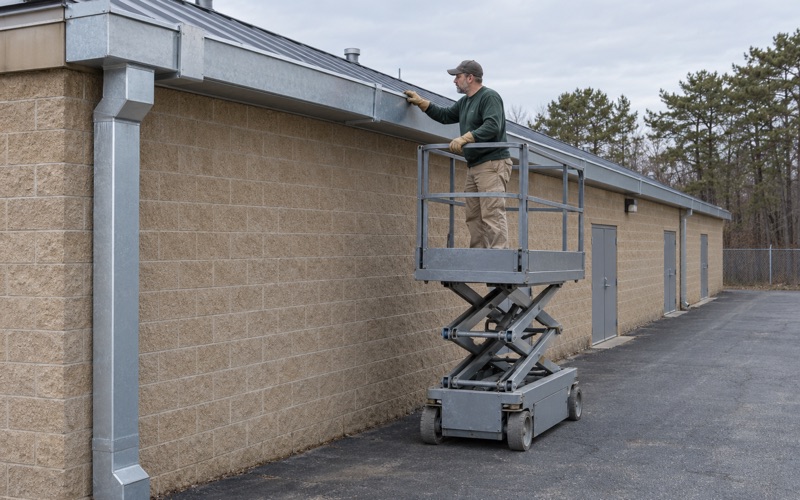
Brick Quality Gutters has spent more than 20 years installing, repairing and cleaning gutters in Toms River, and the jobs here have a pattern of their own. Many of the lots we visit drop needles as well as leaves, and that changes how often a gutter needs attention, which guard fits it and what happens to the debris once it comes down off the roof.
This page covers the work as it plays out in this township: spring cleanings timed ahead of the dry months, screens chosen for needles rather than broad leaves, the way the township wants yard waste set out, and new seamless systems for the houses that need them. If your gutters overflow, sag or hold a mat of brown needles every April, you are in the right place.
We size each gutter and downspout to the roof area that drains into it, form seamless runs on site, and leave a set of before-and-after photos when the work is done. Most homeowners call us for one problem and end up with a clear picture of the whole drainage system, from the drip edge down to where the water lands.
Pine Needles and Gutters in Toms River
A Township on the Pinelands List
Toms River Township is one of the 14 Ocean County municipalities on the New Jersey Pinelands Commission’s list of Pinelands Area towns, published August 24, 2021. The township carries no marker for having its whole land area inside the State-designated Pinelands Area, so only part of it falls within that boundary. We do not claim to know which neighborhoods sit inside the line, and the Commission’s list does not say.
What matters for a gutter is simpler than a map line. Plenty of yards in and around the township hold pines close to the house, and the Pinelands Commission writes its homeowner advice with exactly those trees in mind. Its wildfire sheet tells residents to clean the roof and gutters regularly to prevent accumulation of pine needles, twigs, leaves and other flammable materials.
What Needles Do Inside a Gutter
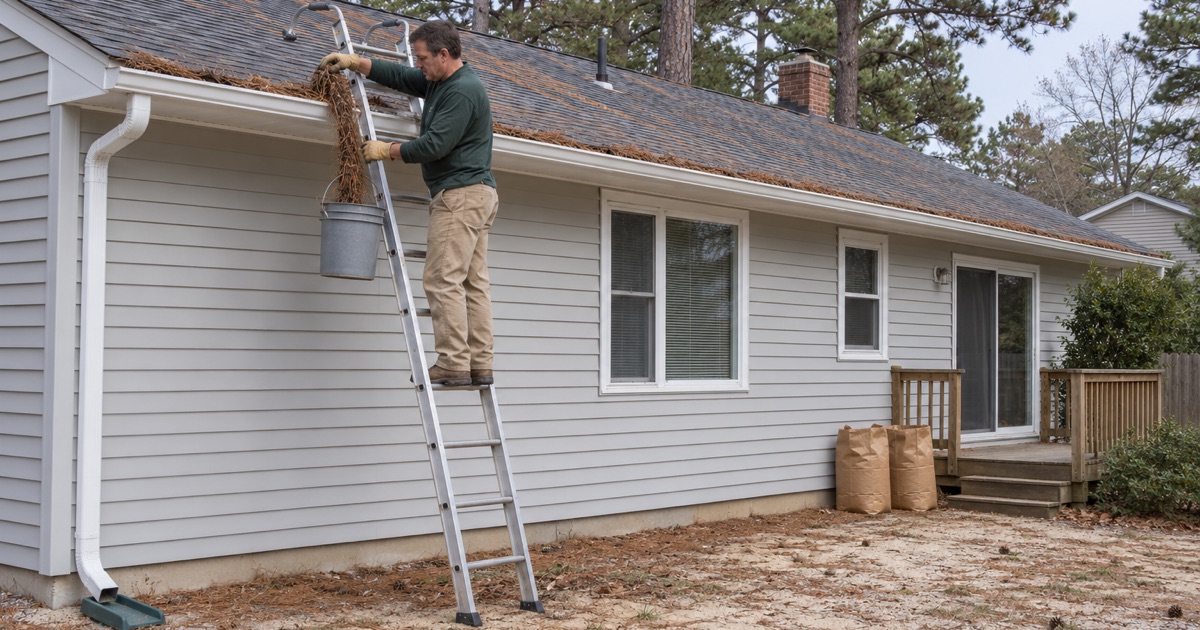
Pine needles behave differently from oak or maple leaves once they land in a trough. They are thin enough to slide through wide screens and long enough to weave into a mat across the bottom of the gutter. That mat holds water, rots slowly and eventually builds into a dam at the outlet.
Once the outlet is choked, rain spills over the front edge and lands along the foundation, or it backs up under the drip edge and soaks the fascia. Dry weather causes a second problem, because a full gutter of brown needles sitting against the roof edge is exactly the kind of fuel the Commission asks homeowners to remove. A clean gutter in this part of New Jersey earns its keep twice: once for drainage, once for fire season.
Looking for gutters closer to Spring Lake Heights? See Spring Lake Heights Gutters.
Spring Cleaning Before Fire Season
Why the Calendar Points to March
The New Jersey Department of Environmental Protection describes mid-March to mid-May as the typical peak wildfire season in the state. That timing surprises people who think of gutter cleaning as a November chore. In a yard with pines, the needles that dropped over fall and winter are still up there in March, dry and packed, just as the risky weeks begin.
For that reason we treat a spring visit in Toms River as fire-season preparation, not just leaf cleanup. The same DEP grant round that published the season dates listed keeping gutters clear of leaves and pine needles as home-hardening work. One of the funded groups was a Toms River homeowners association, Greenbriar Woodlands, which received $4,200 for that kind of effort in 2026.
The Commission’s sheet also asks owners to remove dead limbs adjacent to or over the house. We do not cut trees, but we point out branches that hang over a gutter line and keep refilling it. Knowing where the debris comes from helps you decide whether the fix is a guard, a tree service or both.
What a Cleaning Visit Covers
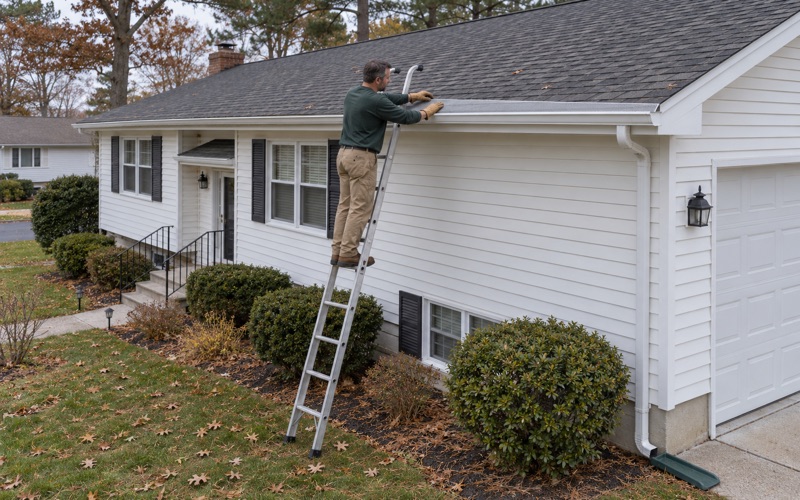
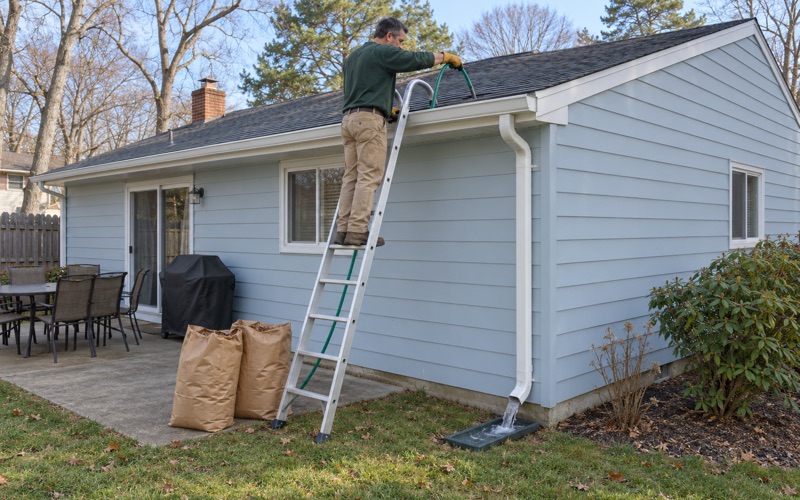
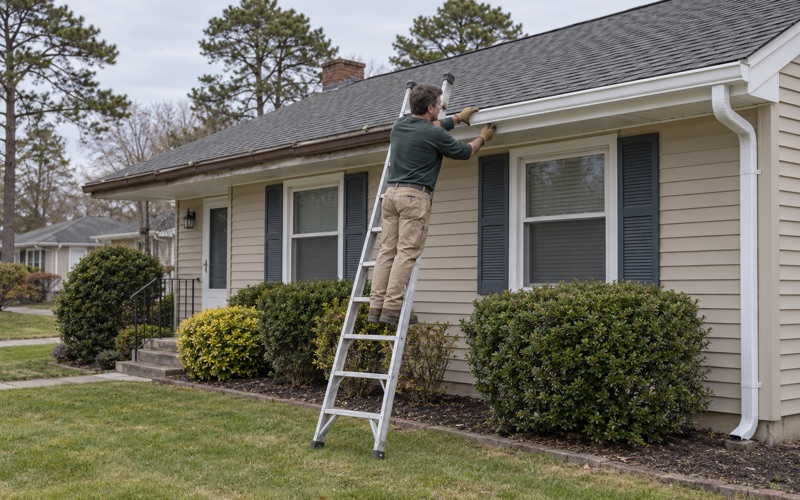
A cleaning starts with the troughs and ends with the downspouts. We clear every run by hand, then flush each downspout to confirm water moves all the way through the elbows and out the bottom. A downspout that drains clean at the top but backs up at a buried elbow is a common find on older houses.
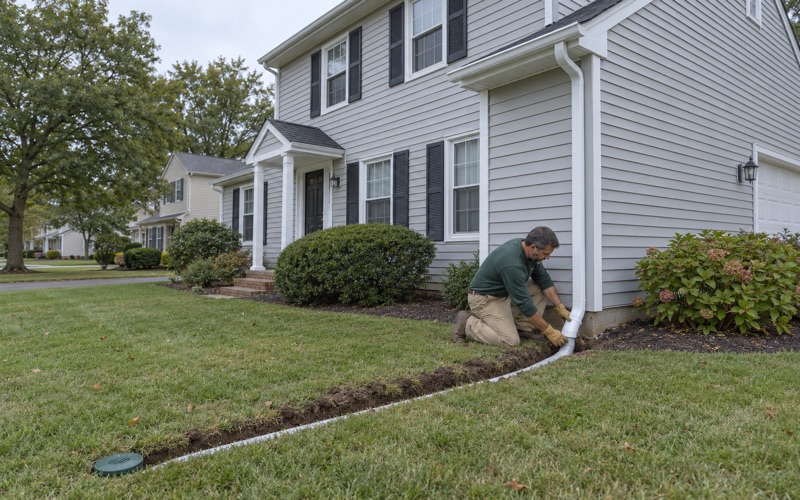
We also check where the water lands. If a downspout empties against the foundation, we say so and suggest an extension or an underground line with a pop-up emitter, sized to carry the flow away from the house. You get before-and-after photos of the gutters, which is useful if the house is a rental or a second home you do not see every week.
Bagging What Comes Out: Toms River’s Leaf Rule
What leaves your gutters has a set-out rule in this township. Section 442-14 of the Township of Toms River Code requires residents to separate leaves from other solid waste and, unless they are composted or mulched on the property, place them at the curb in bags. The ordinance states plainly that loose unbagged leaves are not accepted.
Our visits bag the debris as a matter of course, so nothing is left raked onto the lawn or swept into the street. Whether the township treats pine needles as leaves for collection is something we have not confirmed, so ask the township’s recycling office if you are unsure how to set out a load that is mostly needles. Either way, a bag at the curb is better than a pile blowing back into a storm drain.
Gutter Guards That Stop Pine Needles
Micro-Mesh for Needle Lots
Guards are not one product, and the wrong screen on a pine lot can make cleaning harder. Coarse perforated covers and foam inserts catch broad leaves well enough, but needles slip through the openings or stand upright in them and trap more debris on top. Over a season or two the guard becomes another layer to clean.
For homes under pines, we usually recommend stainless steel micro-mesh guards. The weave is fine enough that needles ride across the surface and blow or wash off rather than dropping into the trough. Mesh still needs an occasional brushing, and we tell owners that up front, but it keeps the inside of the gutter clear through the spring months that matter most.
Matching the Guard to the Lot
Before we quote a guard, we look at what is actually falling on the roof. A house with oaks out front and a stand of pines behind it may need different screens on different runs, and we would rather fit each side to its debris than sell one product for the whole roofline. We also check the gutter pitch and hangers first, because a guard laid on a sagging gutter only hides the problem.
A guard does not make a house safe from fire, and we never describe it that way. What it does is cut down how much dry material collects along the roof edge between cleanings. Paired with a spring visit, it gives you fewer surprises when the weather turns dry and windy.
Gutter Installation and Repair for Toms River’s Detached Homes
Built for the Houses Here
Toms River is largely a township of detached houses. Census estimates count 36,282 detached units out of 46,504, about 78.0 percent, and 17,097 housing units were built between 1960 and 1979. Many of those houses are on their second or third set of gutters, and some still carry undersized troughs that were never matched to the roof.
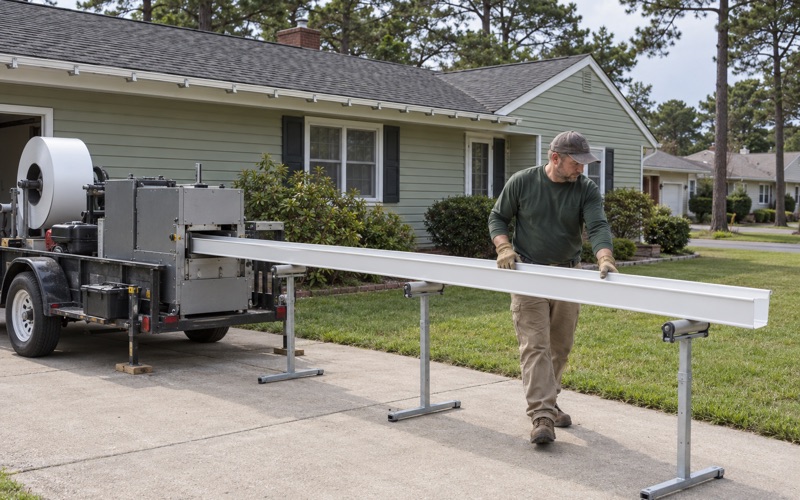
We size each run for the roof area that drains into it, which often means 6-inch K-style gutters with 3x4 downspouts on long or steep sections. The gutters are formed on site from .032 aluminum coil, one seamless piece per run, so there are no joints along the length to leak. We hang them on hidden hangers rather than spike and ferrule, and seal the corners and outlets with tripolymer sealant.
Fascia, Flashing and Where the Water Goes
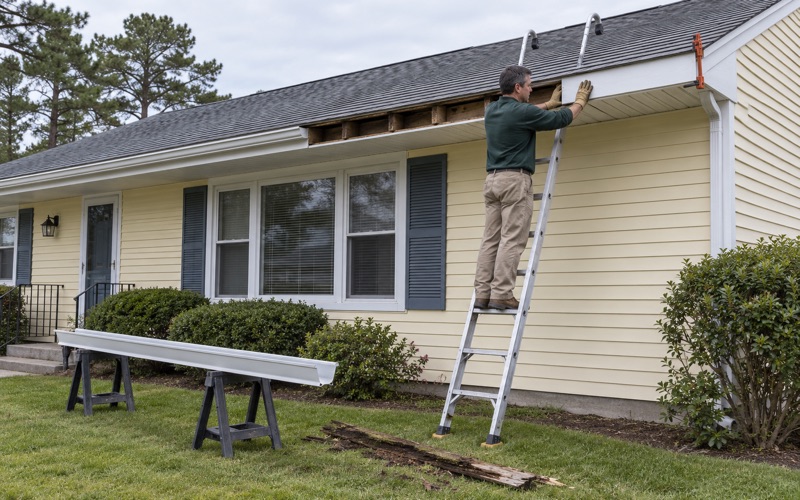
Before a new gutter goes up, we test the fascia board behind it. Rot is common where an old gutter overflowed for years, and we show you any soft wood before we replace it so you can see why it is on the estimate. On houses built before 1978, painted fascia and trim fall under the EPA’s lead-safe Renovation, Repair and Painting rule, which shapes how that wood is handled.
We also check the gutter apron, the drip edge and any kickout flashing where a roof meets a wall. Then we follow each downspout to where it discharges. The New Jersey edition of the residential code calls for grade that falls 6 inches within the first 10 feet from the foundation, and a downspout dumping at the base of the wall works against that slope.
Estimates and Paperwork
Gutter repair, replacement and installation count as ordinary maintenance under New Jersey’s construction code, so gutter work needs no permit. Sales tax is a different story. New gutters are treated as a capital improvement, while repairs are taxable, so our estimates list new work and repair work on separate lines.
Our contracts follow New Jersey’s home improvement rules, including the three-day cancellation notice. If you are buying a house in the township and the inspection flagged the roof drainage, we can walk the system with you and price exactly what was noted.
- 20+ Years Experience
- Free Written Estimates
- Before-and-After Photos