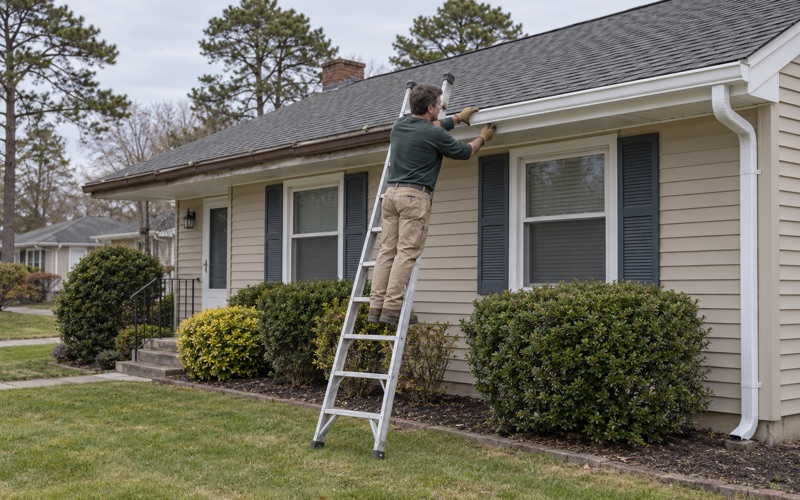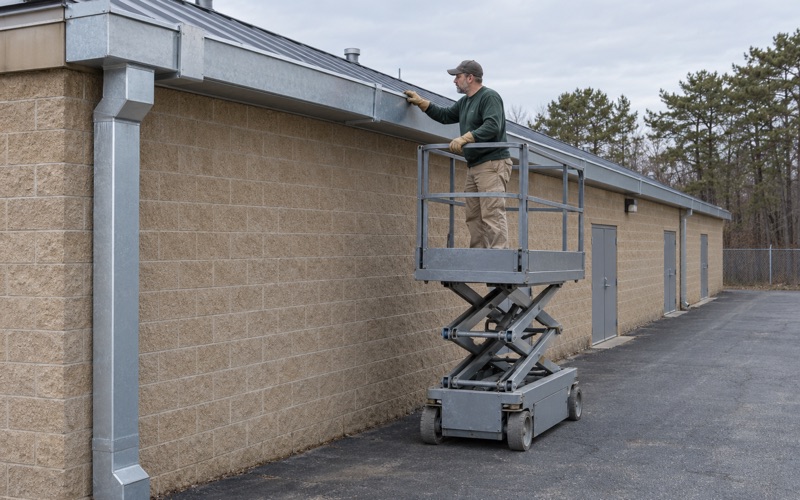
Brick Quality Gutters has spent more than 20 years installing, repairing and cleaning gutters in Tinton Falls and across Monmouth County, and much of the borough’s housing stock includes houses that are only a few years old. A young gutter system raises a question an older one does not: is this problem mine to fix, or the builder’s? We help owners answer that before anyone picks up a ladder.
New construction does not mean trouble-free drainage. A run that was hung a little flat, a downspout that empties next to a fresh foundation, or an outlet that drips at the seam can all show up in the first season. Some of those are defects the builder is expected to correct, and some are ordinary upkeep that falls to the owner.
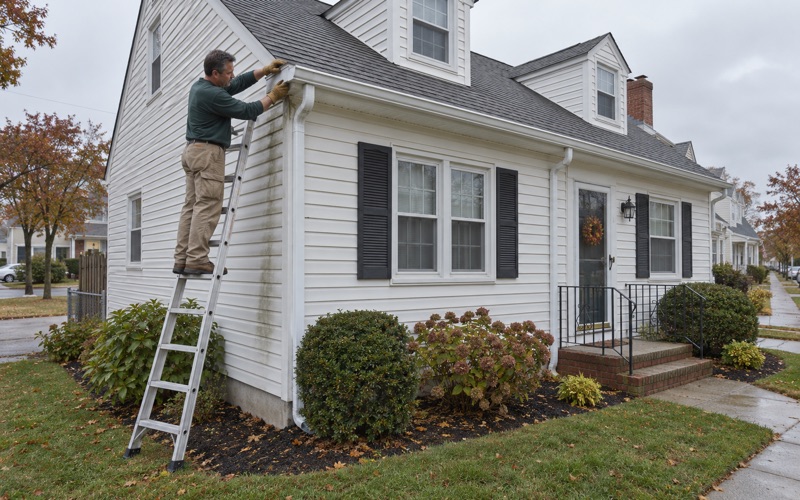
Our job is to look at the gutters with that split in mind. We measure the pitch, follow each downspout to where its water lands, and check the fascia behind the gutter before recommending anything. Then we tell you plainly what we found and who most likely owns the fix.
New Homes on the Former Fort Monmouth
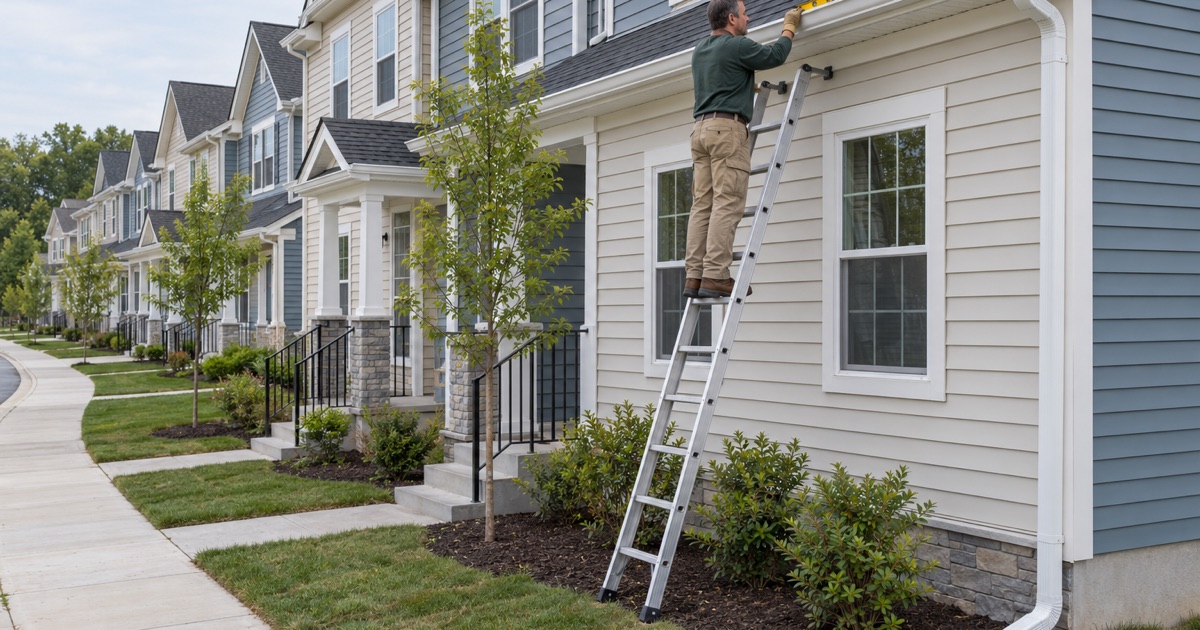
Much of the newest housing in the borough sits on land the Army once used. That history shapes the gutter work we see, because a neighborhood built in the last decade has different problems than a 1980s colonial.
From Army parcel to townhome rows
In 2015 the Fort Monmouth Economic Revitalization Authority, the state agency handling the old fort, authorized the sale of 52 acres in Tinton Falls to US Home Corp., a Lennar subsidiary. The plan called for 288 residential units, townhomes and single-family detached houses, along with up to 58,000 square feet of retail and other space. That land is part of what locals call the Charles Wood Area.
Lennar’s Patriot’s Square, across from the municipal complex, brings three-story and two-story townhomes together with commercial space. Anthem Place adds single-family houses on the Charles Wood parcel. Attached townhomes put gutters high on long rooflines with shared walls, so a single slow run can spill toward a neighbor’s entry as easily as your own.
What a young gutter system needs
The Census count for Tinton Falls shows 991 housing units built in 2010 or later, out of 9,124 in the borough. Many of those houses still carry the gutters the builder installed. We check the gauge, the profile and the downspout size first, and whether those suit the roof area draining into each run.
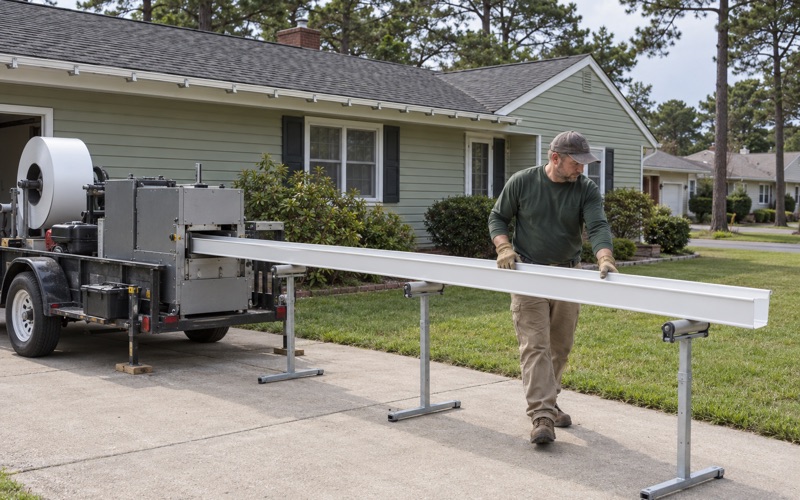
We size gutters and downspouts for the roof area that feeds each one, not by habit. On a tall townhome with a large rear slope, moving from a 5-inch to a 6-inch K-style gutter with 3x4 downspouts can stop overflow that a cleaning never would. When we replace a run, we form it seamless on site from .032 aluminum coil, one piece per run, and set it on hidden hangers rather than spike and ferrule.
Looking for gutters closer to Eatontown? See Eatontown Gutters.
What New Jersey’s New-Home Warranty Says About Gutters
New Jersey’s new-home warranty regulations, N.J.A.C. 5:25, administered by the Department of Community Affairs, set performance standards for new houses. Gutters and downspouts are named in them directly, which is unusual and useful for an owner trying to sort out a problem.
The one-year window and the warranty date
Under N.J.A.C. 5:25-3.2, a new home is to be free of performance standard defects for one year from the warranty date. The rules define that date as the owner’s first occupation or the settlement date, whichever comes sooner. Longer periods of two and ten years apply only to mechanical, electrical and major structural defects, not to gutters.
That makes the first year the window that matters for gutter complaints. Whether a particular house was enrolled in the state plan or a private plan is something to confirm from your closing papers or the builder. We do not administer any warranty and hold none of our own, so we point owners to their paperwork rather than guessing.
Leaks and pitch are the builder’s to correct
The gutter standard, N.J.A.C. 5:25-3.5(f)7, lists leaking gutters and downspouts as a deficiency. Improperly pitched gutters are a deficiency too. During the warranty period, those are conditions the builder is expected to correct, which is why we write down what we see before suggesting any change of our own.
A leak at a miter or an end cap, a seam that drips after rain, or a run that tilts back toward the house instead of toward the outlet all fit those descriptions. We note the location, take photos and measure the slope. That record is yours to hand to the builder if the house is still inside its first year.
One inch of standing water
The same standard says standing water in gutters is acceptable if it does not exceed one inch in depth. A little water sitting in a run after a storm is therefore not, by itself, a defect under the rule. A shallow puddle that worries an owner may be one the regulation already treats as normal.
We measure it rather than eyeball it. If the water is under an inch and drains slowly, the gutter is likely within the standard. If it sits deeper, or never clears between rains, we look for a flat section, a sagging hanger or a blocked outlet, and tell you whether the cause points to pitch or to debris.
Builder Deficiency or Owner Maintenance
The warranty standard draws a line that settles many disputes before they start. It also assigns a job to the owner, and that job is the one most people overlook in a new house.
The owner’s half: leaves and debris
N.J.A.C. 5:25-3.5(f)7 makes the owner responsible for keeping gutters and downspouts free of leaves and debris to prevent overflow. An overflow caused by a clogged outlet is generally an upkeep issue, even on a house that closed last spring. It is worth knowing this line before reporting water spilling over the front edge as a defect.
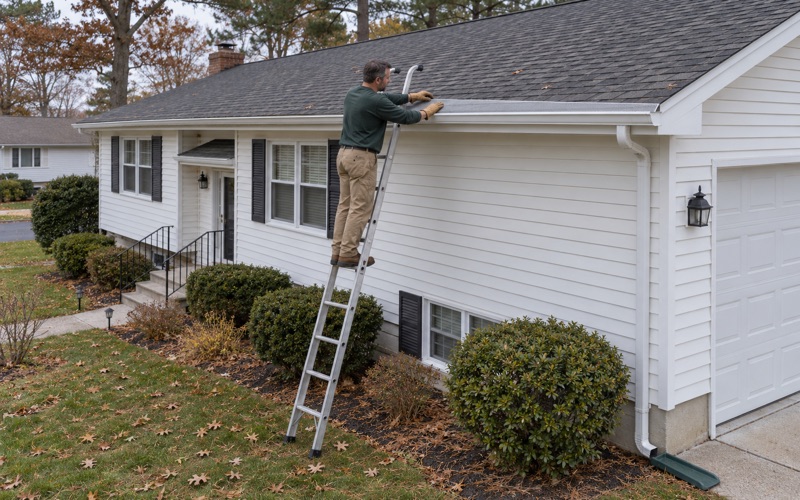
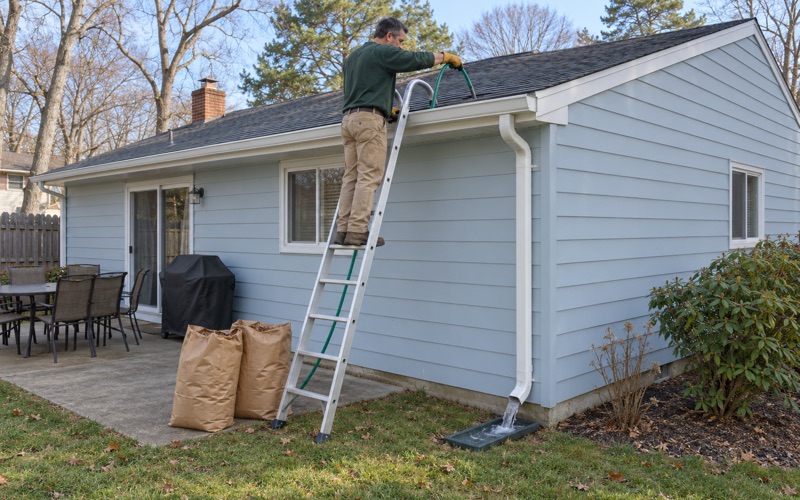
Our cleaning visits are built to cover that half. We clear each run by hand, flush every downspout to confirm it flows, and bag the debris and haul it away with us. You get before-and-after photos, which also help show a builder that a run still leaks or sits flat after it has been cleaned out.
Sorting it out before anyone changes the gutters
On a house still inside its first-year warranty, we suggest calling the builder before a third party alters the system. That is our practice, not a rule we have read, but changing a run first can muddy a claim. If the year has passed, the decision is simply yours.
Replacing or adding gutters and leaders is ordinary building maintenance under New Jersey’s construction code, N.J.A.C. 5:23-2.7(c)1.xvi, so no construction permit is involved. In a townhome community, we check the master deed or ask the management office first, because who holds the gutters varies from one community to the next.
Paperwork you can use
Every repair estimate we write lists new gutters and repair work on separate lines, because New Jersey taxes them differently. New gutters can be an exempt capital improvement, while repairing existing ones is a taxable repair. The split also makes it clear which work answers a builder issue and which is an upgrade.
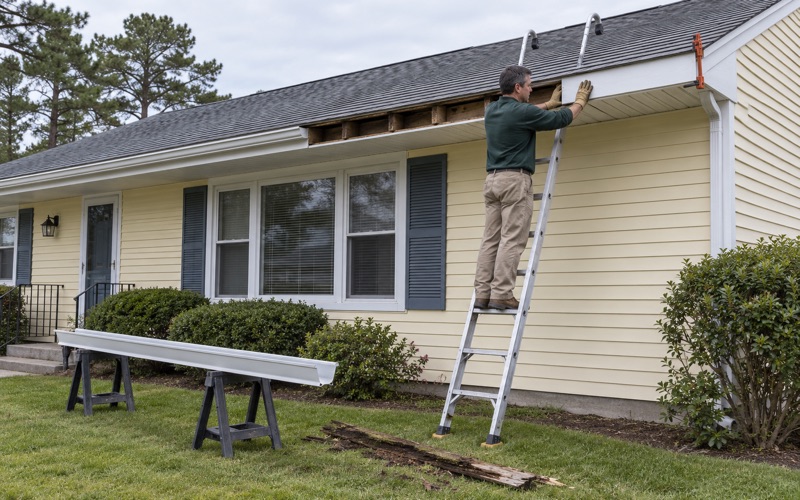
Our contracts follow New Jersey’s home improvement rules, including the three-day cancellation notice. If the fascia behind a gutter has gone soft, we show you the wood before replacing it. On a new house, rot that early is worth a photo for the builder, too.
Guards, Downspouts and Trees on a Newer House
Once the builder question is settled, many owners want the gutters to need less of them. On a newer house that usually means guards, better downspout drainage, and a plan for the trees that are growing up around the lot.
Guards matched to what falls on the lot
We match guards to the debris that actually lands on the roof. Oak leaves and maple seeds call for a different screen than fine pine needles, which slip through coarse covers. Stainless steel micro-mesh guards handle the widest range, though a lot with few trees may not need guards at all.
Guards do not cancel the owner’s upkeep duty under the warranty standard; they reduce it. We still recommend an occasional check of outlets and downspouts. On a three-story townhome, cutting the number of ladder trips is often the main reason owners ask about them.
Where the downspout water lands
New construction often has fresh grading, and a downspout that dumps beside the foundation can wash it out. The 2021 New Jersey edition of the residential code, at R401.3, calls for grade to fall 6 inches within the first 10 feet from the foundation. We follow every downspout to see where its water goes.
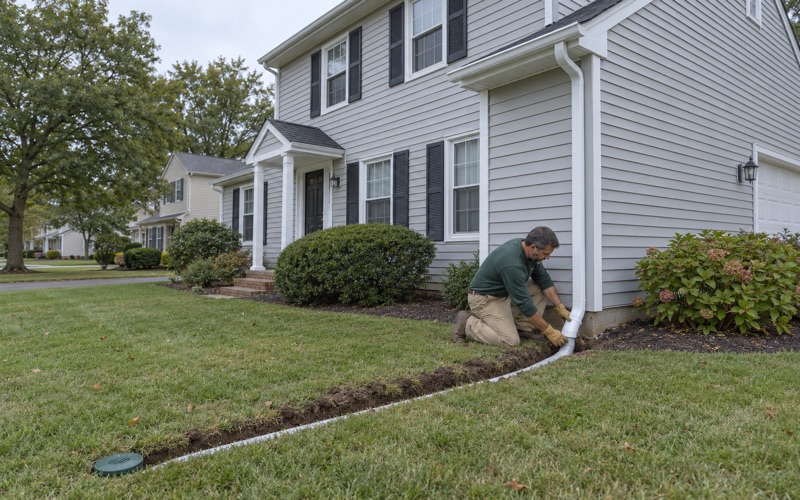
When it lands against the house, we propose an extension or an underground line ending in a pop-up drainage emitter. We also check for kickout flashing where a roof edge meets a sidewall, since a missing kickout sends water down the siding right beside the gutter. Hangers and sealants are named on the estimate.
Trees near the gutters
The borough regulates trees. Under the Tree Removal and Replacement chapter, amended by Ordinance 2022-1490, a tree with a trunk of six inches or more DBH is regulated, and removing one takes a zoning permit and a survey showing the trees. The Zoning Office and the Shade Tree Commission handle those applications.
Trimming a limb that hangs over a gutter is not the same as taking the tree down, but a full removal is a permit step. Storms make the point clear: when Tropical Storm Isaias came through in August 2020, uprooted trees littered streets in Tinton Falls. Keeping branches clear of the roof edge protects new gutters long before a storm arrives.
- 20+ Years Experience
- Free Written Estimates
- Before-and-After Photos