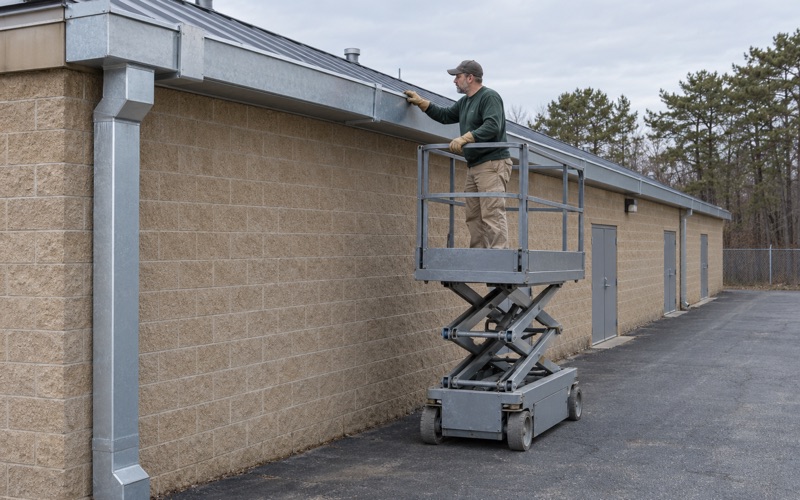
Brick Quality Gutters has spent more than 20 years installing, repairing and cleaning gutters in Shark River Hills, and on this hill most of the job comes down to one question: where does the water go once it leaves the roof? A gutter that holds its pitch matters, but a downspout that empties in the wrong spot can undo it. We plan the two together, one run at a time.
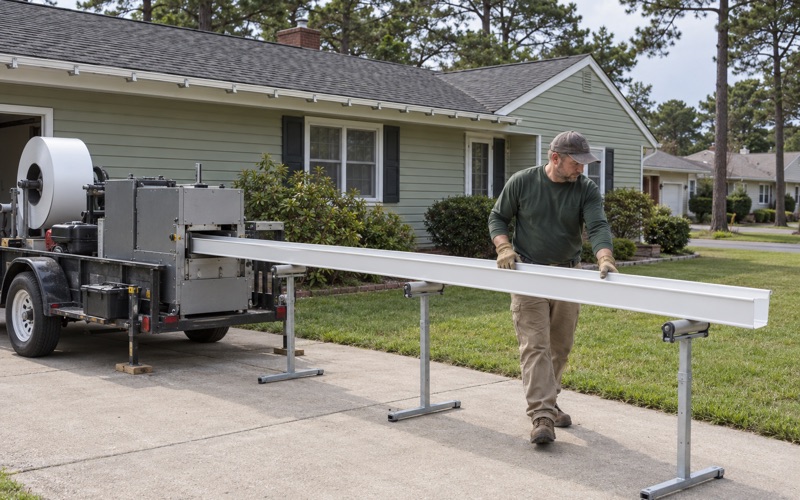
Every run is formed on site from coil as a single seamless piece, sized for the roof area that actually drains into it. A short back roof and a long front slope rarely need the same gutter or the same outlet, so we measure each one instead of installing whatever size went on the last house. That keeps overflow off the fascia and the siding during a hard rain.
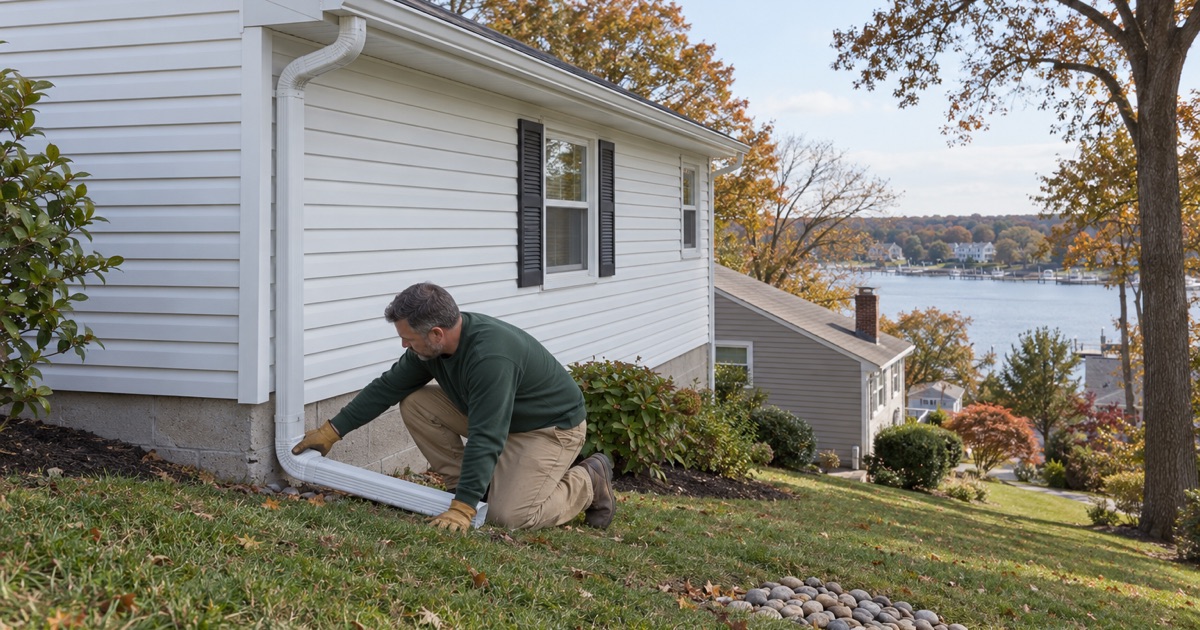
Then we follow each downspout to the ground and look at where its water would end up. On flat land that check is routine. On a sloped lot it decides whether the water soaks into your own yard or keeps going onto the property below.
Gutters on a hilly peninsula
Neptune Township describes Shark River Hills as nestled in the hilly peninsula overlooking 3 1/2 miles of scenic waterfront, and plenty of residents simply call it The Hills. The community is an unincorporated census-designated place inside Neptune Township, bordered to the east and south by the Shark River estuary, with Route 18 along its western edge. That shape is the reason roof drainage here takes more thought than it does on level ground.
Water keeps moving downhill
Rain that leaves a downspout on a slope does not stay where it lands. It runs across the yard, down a driveway or along a walk, then onto the next lot down the hill or toward the river. A downspout that would be harmless on a flat street can send a steady stream across a neighbor’s lawn here.
We have not measured the grade of individual streets, and the fall changes from one lot to the next. So before we decide anything we walk the yard in the direction the ground drops and note where water already collects or cuts a path. That walk shapes where the outlets go and which way each downspout should discharge.
Outlet placement on a sloped lot
Where a gutter drains is a choice, not a fixed feature of the house. On a hillside lot we often move an outlet to the corner where the water can be handled on your own property, rather than leaving it at the corner that faces the neighbor below. Pitching the gutter toward that corner is part of the same decision.
For most houses that means 6-inch K-style seamless gutters with 3x4 downspouts and wide-flange outlets, so a heavy downpour moves through quickly instead of spilling over the front edge. Corners are finished with box, strip or bay miters, and the elbows, whether A or B, are chosen to turn the water exactly where we planned it.
Fasteners chosen for salt air
With the estuary wrapping two sides of the peninsula, the hardware behind a gutter sees moist, salty air for much of the year. We pick hangers, screws and sealants with that in mind, and the material is named on the estimate so you know what is holding the gutter up. Hidden hangers usually outlast spike and ferrule on a run this exposed.
Seams at end caps and outlets are sealed with a tripolymer gutter sealant that stays flexible through the seasons. At the roof edge we check the gutter apron, drip edge and kickout flashing, because water that slips behind the gutter ends up in the fascia no matter how well the downspout is aimed.
Looking for gutters closer to Silver Ridge? See Silver Ridge Gutters.
Which way your downspouts point, and why Neptune Township asks
Neptune’s land development ordinance, Section LDO-1010 on plot plans and as-built surveys, lists the location and direction of all existing and proposed downspouts among the items a plot plan has to show. We know that wording from a search excerpt of the township code, not a full reading of the section. We have not read which applications call for a plot plan, so we never tell an owner that a gutter job triggers one.
Direction is the drainage plan
What the ordinance does show is that the township treats downspout direction as part of how water moves across a property. On a sloped Shark River Hills lot, the direction a downspout points is close to the whole drainage plan. A leader aimed downhill sends water straight toward the lot below, while one turned across the slope gives it more of your own ground to soak into.
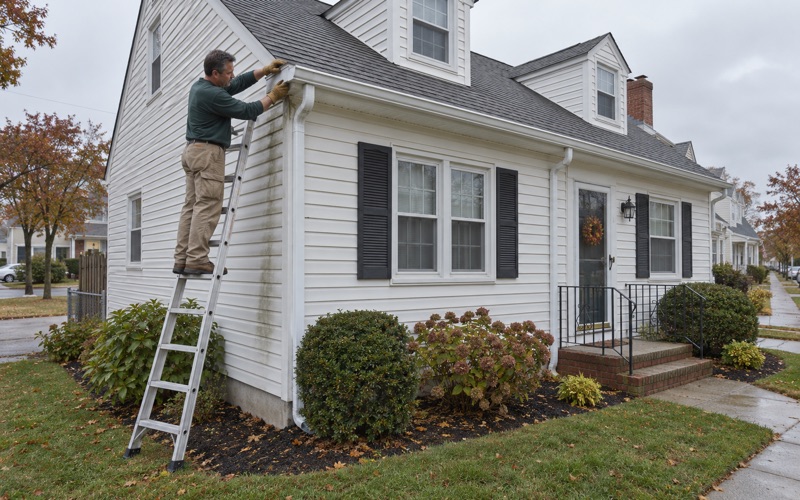
We talk through those options at the house, standing at each downspout. Sometimes a simple turn of the elbow is enough. Other times the only good answer is to carry the water farther along the yard before letting it go.
What we put in writing
The estimate shows each downspout, where it sits on the house and which way it will discharge. If you ever need a plot plan or survey for other work on the property, that information is easy to hand to whoever prepares it. It also gives you a clear record of what was changed and why.
New gutters and repair work appear on separate lines, because New Jersey’s Division of Taxation treats them differently: a new gutter system can count as an exempt capital improvement on Form ST-8, while repairing existing gutters is a taxable repair. Our contracts follow New Jersey’s home improvement rules, including the three-day cancellation notice.
Keeping roof water off the lot below and out of the sewer
The 2021 New Jersey edition of the residential code, Section R401.3, calls for the lot grade to fall at least 6 inches within the first 10 feet from the foundation. That moves water away from the house. On a hill, though, away from the house usually means toward the property downslope, so the downspout has to finish the job the grade starts.
Extensions, emitters and underground lines
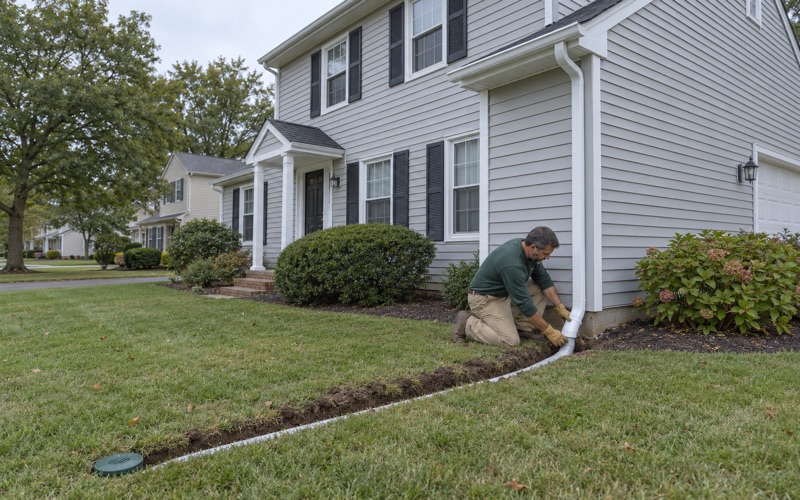
When a downspout empties against the foundation, we propose a fix rather than leaving it. A plain extension can be enough on a gentle stretch of yard. Where the slope is stronger, an underground downspout line carries the water to a pop-up drainage emitter placed where it can spread out and soak in on your side of the property line.
We lay out the route with you before any digging, because a line that runs downhill too directly just moves the problem a few yards. Choosing the emitter location is the same question as choosing the downspout direction, only farther from the house.
Why the downspouts cannot go into the sewer
Neptune’s sewer code, Section 16-3.7 on building sewers and connections, bars connecting roof downspouts, foundation drains and areaway drains to the township sewer. We read that from a search excerpt of the chapter. In practice it means roof water has to be handled on the surface or in a storm system, never tied into the sanitary line.
We will not run a leader into a sewer cleanout, and if we find one already connected during a repair, we point it out and show you the options for sending that water somewhere else. That leaves the lot itself to absorb roof water, which is one more reason the direction of each downspout matters on a slope.
Cleaning that keeps the route open
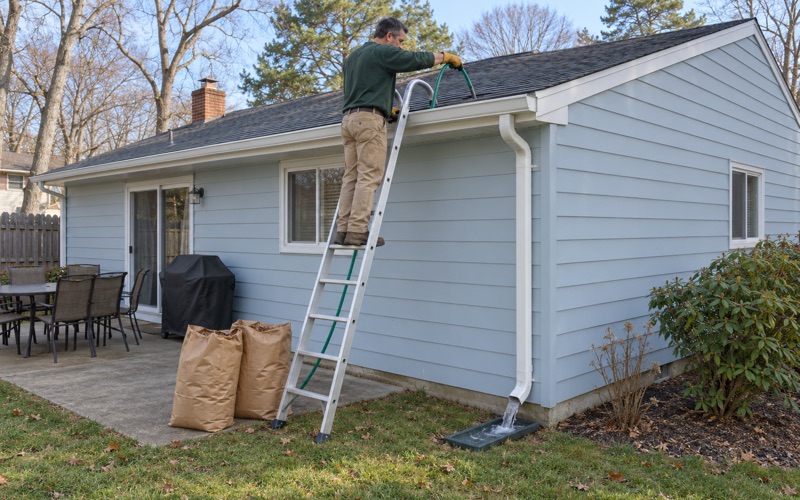
A downspout plan only works while the downspouts flow. On every cleaning visit we flush each downspout from the top, then bag the leaves and grit we pull out and haul them away with us. Nothing is left on the lawn, in the driveway or in the street.
You get before-and-after photos of every cleaning and repair, which helps when you cannot be home for the visit. If the same runs clog year after year, we match a gutter guard to what actually falls on your lot, often a stainless steel micro-mesh screen, rather than selling one style for every house.
Owner-occupied houses from the 1950s and 1960s
According to the 2024 American Community Survey, all 1,275 housing units in Shark River Hills are detached houses, and every occupied home is owner-occupied. Of those houses, 321 were built in the 1950s and 293 in the 1960s, so 614 date from those two decades alone, and another 185 were built in 1939 or earlier. The neighborhood was first marketed as a summer resort in 1923, and the Shark River Hills Property Owners Association dates to 1929.
Fascia on older houses
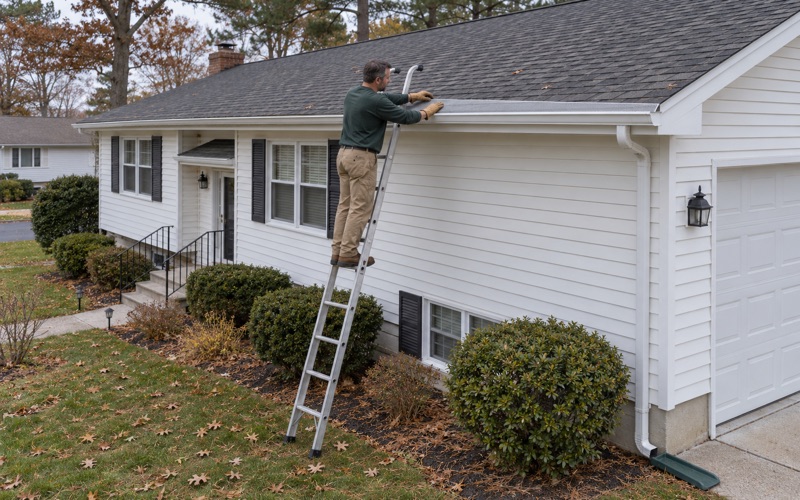
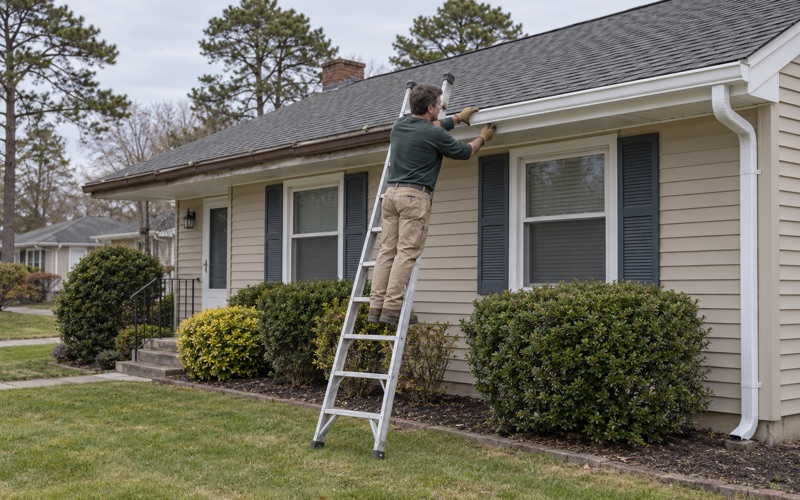
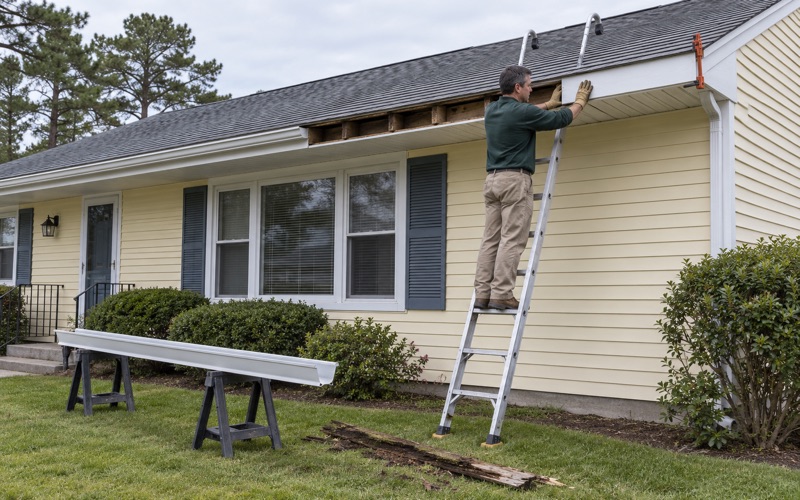
Gutters on houses this age often hang on original fascia boards that have taken decades of overflow. Before new gutters go up, we check the wood behind them for rot. If we find soft spots, we show them to you before anything is replaced, so you see the problem with your own eyes rather than reading about it on an invoice.
Many of these homes were built well before 1978, and the EPA Renovation, Repair and Painting rule under 40 CFR 745 governs work that disturbs painted fascia and trim on pre-1978 houses. We tell you up front when a repair will touch painted wood. That way the plan and the price both account for it.
Matching the gutter to the house
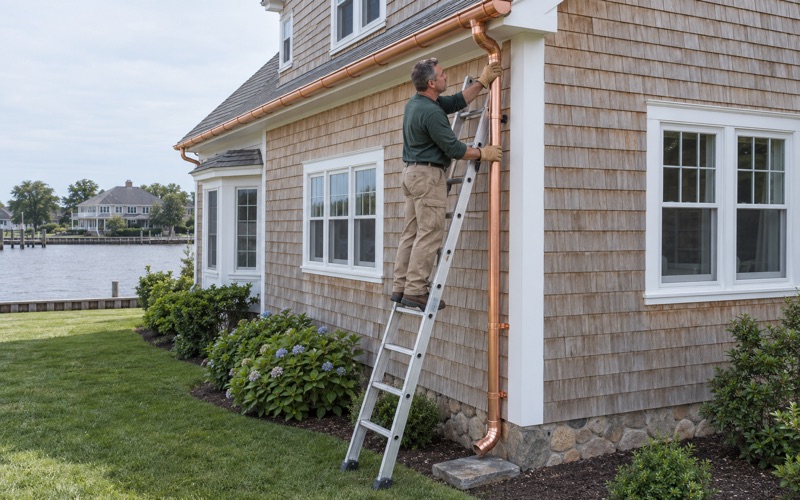
Most houses here take aluminum gutters formed from .032 coil, which suits the low, broad rooflines of the postwar ranches and split-levels. On some of the older houses a half-round gutter with a double-bead profile looks more at home. Where an owner wants it, 16-ounce copper gutters age to a patina that fits an older house better than any painted finish.
Every drainage decision is yours
Because every home in Shark River Hills is owner-occupied, each slope-side drainage decision rests with the person who lives there. We lay out what we found, where each downspout sends its water and what we would change. You decide what gets done, and the estimate spells out exactly that.
- 20+ Years Experience
- Free Written Estimates
- Before-and-After Photos