Brick Quality Gutters has spent more than 20 years installing, repairing and cleaning gutters in Red Bank, and on a good share of the borough’s older houses the first question is not size or color. It is whether the new gutter will look like the old one. Inside the local historic districts, that answer decides who has to see the job before work starts.
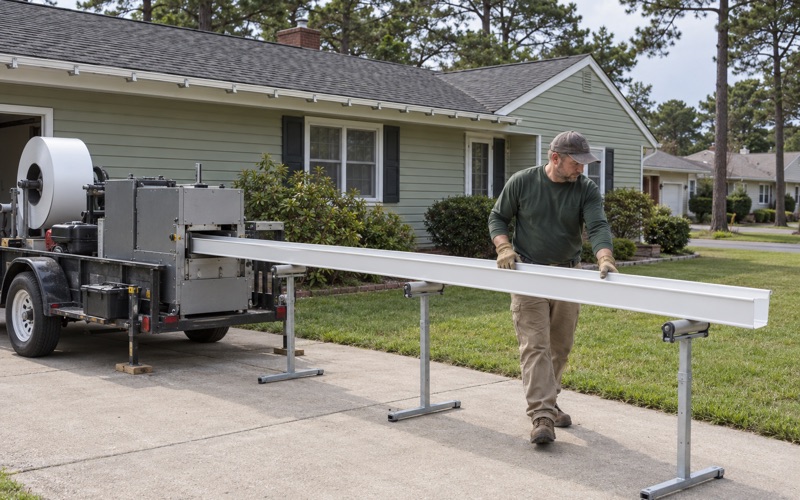
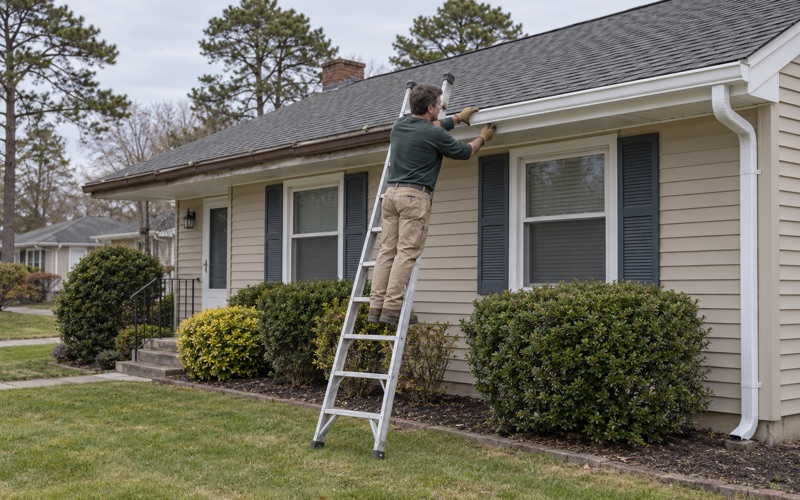
We size each gutter and downspout to the roof area that drains into it, and we match copper and half-round work to the age and style of the house rather than defaulting to one profile. On a plain postwar house that usually means seamless K-style formed on site from coil. On a Victorian with a district overlay, it can mean something very different.
This page covers how the borough’s land use code treats gutters in its two historic districts, what in-kind replacement means for a gutter, and how a job gets routed for review. It also covers the profiles and metals the district guidelines describe, the built-in gutters on landmark buildings, and where roof water is not allowed to go.
Gutters Inside Red Bank’s Two Historic Districts
The Washington Street and Broad Street Districts
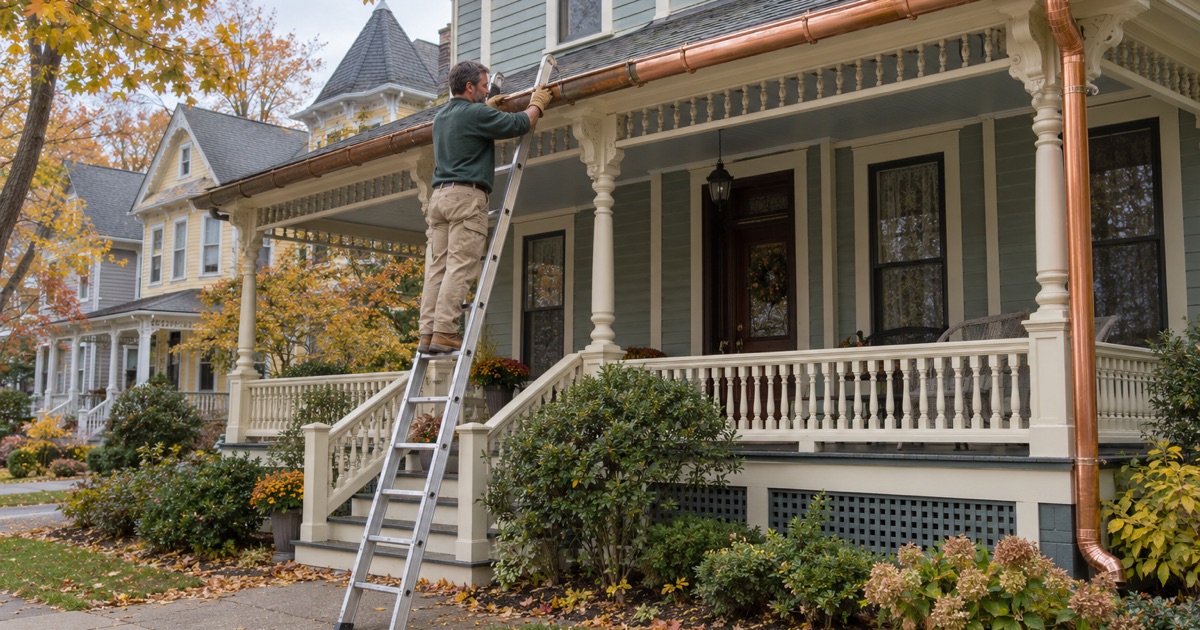
Red Bank has two local historic districts, each an overlay zone on the Borough Zoning Map. The Broad Street Historic District is the commercial one, built around the borough’s main shopping street. The Washington Street Historic District is residential, and the borough’s own guidelines page describes it as “modest Victorian,” so the gutters there hang on porches, gables and eaves that face the street.
Individual historic sites, designated on their own, carry the same review. The Historic Preservation Commission looks at exterior work on all of them, and the borough’s application states that contributing, non-contributing and new structures in the districts all apply. A newer house on a district block is still inside the district for this purpose.
Why a Gutter Counts as Part of the Facade
On a Victorian, the gutter runs along the most visible line of the house, so it reads as trim as much as plumbing. The HPC application lists “Chimney/Gutter” as its own scope box, next to “Eaves (cornice, soffit, facia),” and asks for product specification sheets with the submission. The application fee is $50.
The borough’s Zoning Officer serves as the administrative officer for historic preservation and makes the first call on any job. We describe the existing gutter, the proposed gutter and the fascia behind it so the owner can bring a clear picture to that office. Whether a job needs review is the borough’s decision, not ours, and we say so on the estimate.
Looking for gutters closer to Millstone Township? See Gutters Services in Millstone Township.
In-Kind Replacement and How a Gutter Job Is Routed
What “Having the Same Appearance” Means
Section 490-55A of the land use code defines ordinary maintenance and repair as repair “with in-kind material and quality workmanship.” It goes on to include “in-kind replacement of exterior elements or accessory hardware … using the same materials and workmanship, and having the same appearance.” For a gutter, that means the same metal, the same profile and the same way of hanging on the house.
Read as written, replacing a worn copper half-round with new copper half-round fits that definition. Swapping a Victorian’s half-round or built-in gutter for aluminum K-style changes the appearance, and the code calls a change in appearance of an exterior surface an alteration. That kind of swap is the job most likely to be sent on for review before anything is ordered.
Ordinary Maintenance, Minor Work or the Full Commission
Referral to the Commission is skipped only for work that “strictly” meets the ordinary maintenance definition, under § 490-55F(2). The same subsection adds that “If the administrative officer has any doubt as to whether the work constitutes ordinary maintenance and repair, then the proposal shall be referred to the Commission.” We never tell an owner that a job will skip review.
Between the two ends sits the Minor Work Review Committee, made up of the Commission’s Chair and two members. It approves minor applications without a public hearing, and those include roofs and exterior sheathing that comply with the adopted design guidelines. On a full application, the Commission reports to the Planning Board within 30 days, and the Planning Board makes the decision.
The State Construction Code Is a Separate Question
New Jersey’s construction code lists “The repair, replacement, or installation of exterior gutters and leaders” as ordinary building maintenance, under N.J.A.C. 5:23-2.7(c)1.xvi. Under that rule, a straight gutter job needs no construction permit from the Red Bank Building Department. It does not settle the historic question, because district review is a zoning step under Chapter 490.
Owners sometimes hear the first half and assume the second. We keep both on the same sheet: the state rule on one line and the district status, as the owner learns it from the Zoning Officer, on the next. Our contracts are written to New Jersey’s home improvement rules, including the three-day cancellation notice, so a review that changes the plan does not trap anyone.
Half-Round, Copper and Built-In Gutters
Half-Round Gutters and Round Downspouts on Washington Street
The borough attached Historic Design Guidelines to Chapter 490 through Ordinance 2026-01, adopted January 22, 2026. Its gutters and downspouts section, in the excerpts we have read, says “In the Washington Street Historic District, half-round gutters and round or rectangular downspouts.” It is the reference the Commission uses when reviewing an application for a certificate of appropriateness.
Another excerpt from the same section reads “Replace only with half-round gutters and round downspouts in copper or painted galvanized metal.” We quote only those excerpts, because the full section was not available to us. When an owner is weighing profiles, we bring the guideline wording to the conversation and leave the reading of it to the Zoning Officer and the Commission.
Copper or Painted Galvanized Metal
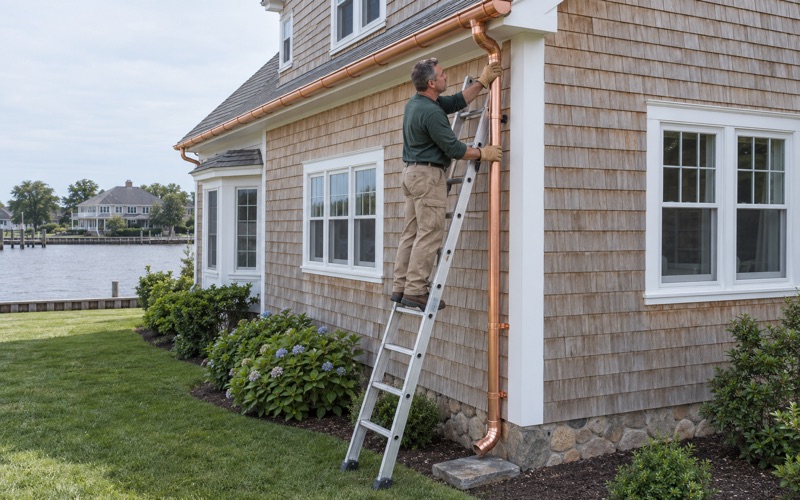
Copper half-round goes up with a double-bead edge and hangers that show, and it weathers from bright metal to brown and then toward a green patina over the years. We work in 16-ounce copper and match the outlet, the elbows and the downspout so the whole run reads as one piece. Mixing metals on one run also invites corrosion where they touch.
Painted galvanized half-round is the other material the excerpt names, and it suits a house whose trim is painted anyway. With the borough on the Navesink River, we pick hangers, fasteners and sealants for damp, salty air and name the material on the estimate. New gutters and repair work go on separate lines, because New Jersey taxes them differently.
Yankee and Built-In Box Gutters
Some of Red Bank’s older buildings never had a hanging gutter at all. The borough guidelines illustrate Yankee or pole gutters and lined box or built-in gutters among the types found in its districts. NJ Transit’s restoration of the 1876 Red Bank Station, completed in 2014, rebuilt the station’s “Yankee” gutters and installed new downspouts.
A built-in gutter is part of the roof edge, lined with metal and hidden behind the trim. When one leaks, the usual damage shows up as rot in the cornice or soffit below. Relining it in kind keeps the look, while pulling it out for a hanging gutter changes the roofline, and the roofline is exactly what the appearance test protects.
Downspouts, Fascia and Older Paint
Where the Water Goes: No Sewer Connections
Red Bank’s sewer chapter is direct about roof water. Section 695-40G reads: “No cellar drains, no area drains, no roof leaders, no sumps pumps, and no downspouts shall be connected to the sewage system.” Section 695-40C separately bars “roof runoff” from any sanitary sewer, so a downspout feeding an old clay lateral is a violation rather than a drainage choice.
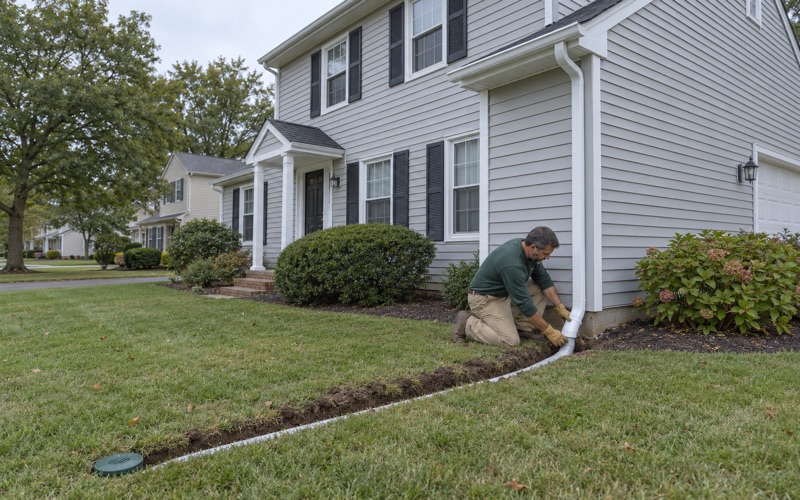
We follow every downspout to where its water lands, and on prewar lots that sometimes means finding a leader that disappears into the ground. When one drains against the foundation instead, we propose an extension or an underground line to a pop-up emitter. Round downspouts can still run to a buried line, so the historic look and a dry cellar do not have to compete.
Fascia, Paint and Prewar Trim
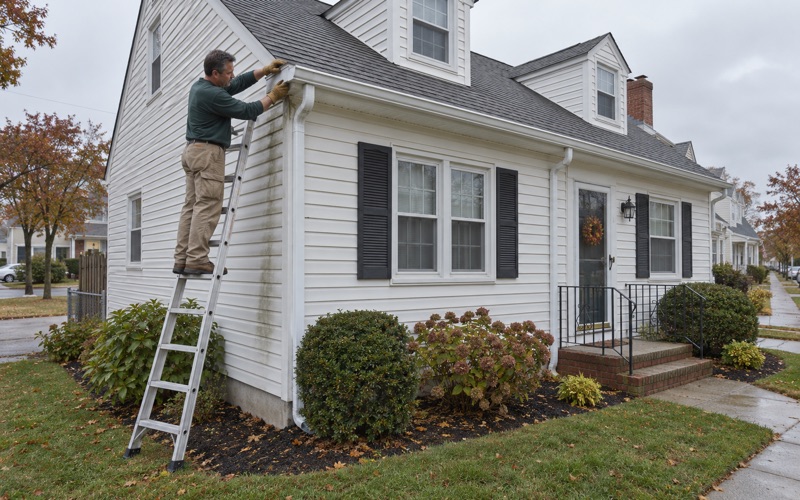
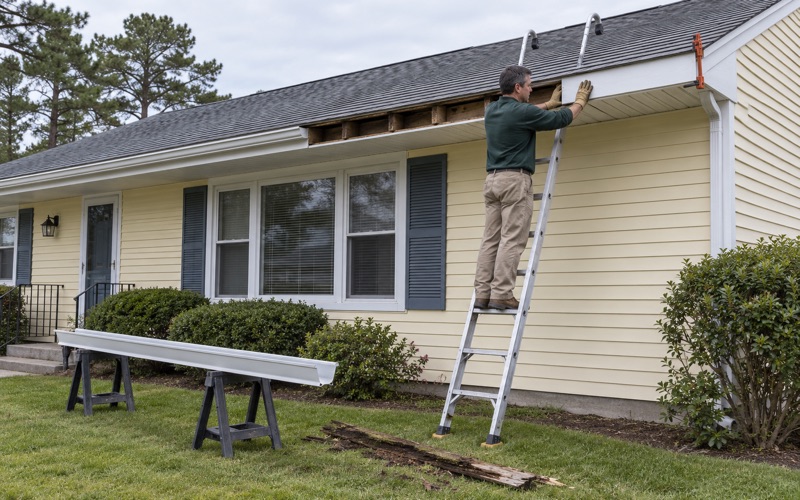
Of the borough’s 6,216 housing units, 2,017 date from 1939 or earlier, according to the Census Bureau’s 2024 five-year estimates. On many of those houses the fascia, box-gutter linings and wood gutters carry layers of paint. Before new gutters go up, we check the fascia for rot and show the owner any soft wood before we replace it.
Painted trim brings in the federal Renovation, Repair and Painting rule. Its “minor repair and maintenance” exception covers exterior work that disturbs 20 square feet or less of painted surface, under 40 CFR 745.83. A full fascia replacement on a long Victorian eave can pass that figure, so we measure the painted area on the estimate before work is scheduled.
Cleaning, Photos and Absent Owners
About half of Red Bank’s occupied homes are rented, which means a landlord is often the one deciding about a gutter they rarely see. Every cleaning and repair comes with before-and-after photos, so the owner can see the condition of a copper run or a box lining without a trip. That record also helps if a later job needs to show what was there.
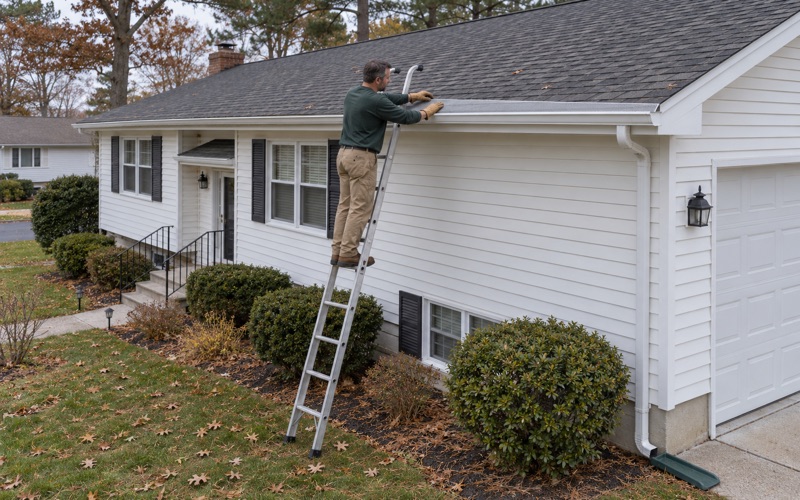
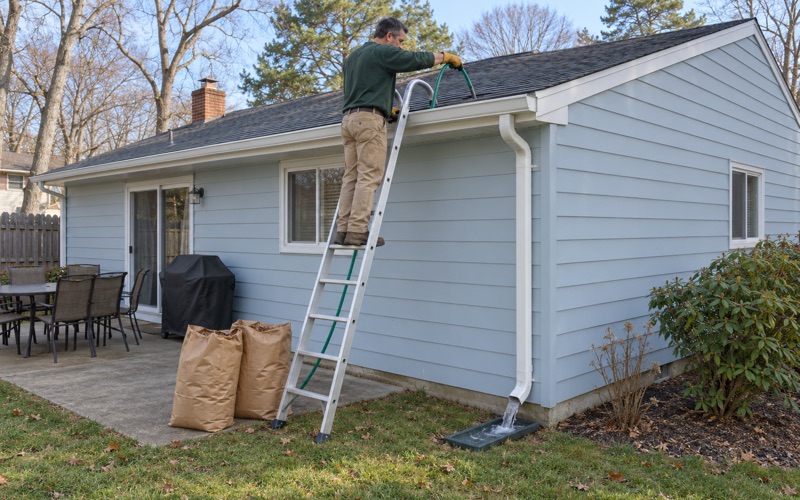
Cleaning visits flush every downspout and bag the leaves and grit, and we haul the bags away rather than leaving anything in the yard or on the street. On half-round and built-in gutters, we clean by hand so the hangers and linings are not bent. Where trees overhang the roof, we match a guard to the debris, if the house and the district allow one.
- 20+ Years Experience
- Free Written Estimates
- Before-and-After Photos