
Brick Quality Gutters handles gutter replacement in Brick, NJ, serving surrounding cities including Point Pleasant, Leisure Village East, Brielle, Point Pleasant Beach and Leisure Village. Over 20+ years we have taken down tired sectional gutters, rusted steel troughs and undersized runs from homes across Ocean and Monmouth counties and replaced them with seamless systems built for the roof and the location.
Replacement is a bigger decision than a repair, and it should rest on what the old gutters are actually doing. We look at every run, count the leaking joints and loose hangers, check the fascia, and note where water overflows or lands against the house. When a few targeted repairs will buy several more good years, we say so; when the system is failing along most of its length, we explain why a new one is the better value.
Every replacement estimate is itemized: the new gutters and downspouts on one line, any fascia or repair work on its own, and the coil, hangers and sealant named. New gutters can qualify as an exempt capital improvement under New Jersey sales tax rules, which is one more reason to keep the lines separate.
Signs Your Gutters Need Replacing
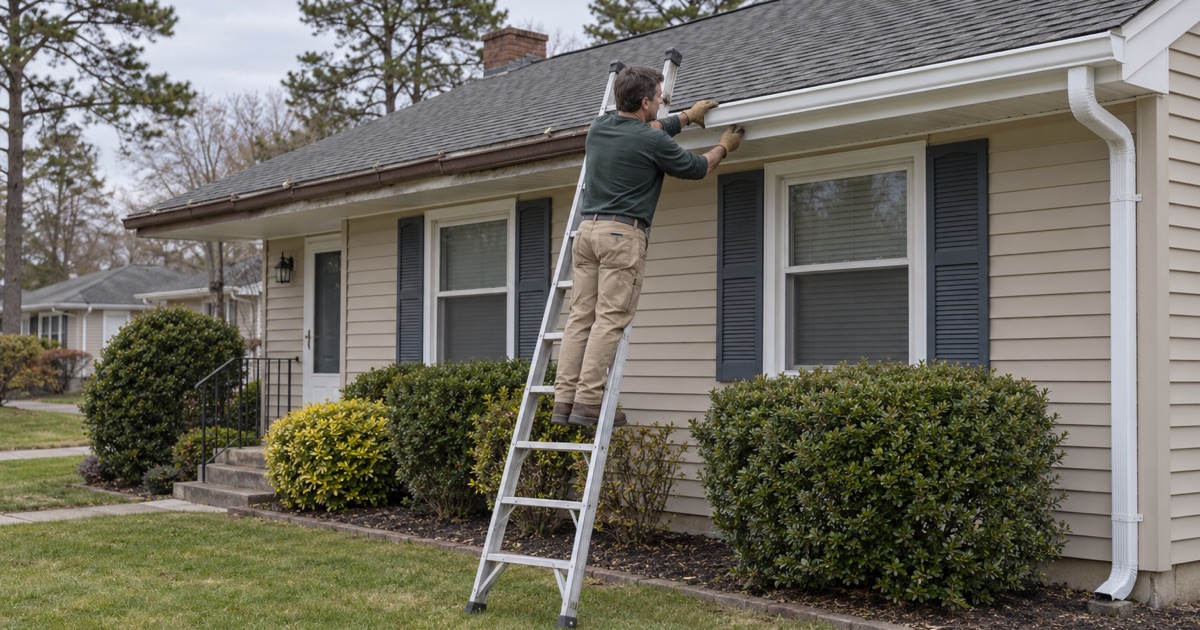
Leaks at Many Joints and Seams
One or two leaking corners can be resealed. When nearly every joint drips, the sections have pulled apart, or the old sealant has been patched over several times already, the gutter has reached the point where repairs stop holding. Sectional gutters joined every few feet are especially prone to this as they age.
We count the leak points during the inspection and show the owner where they are. If the repair list starts to approach the cost of a new run, replacement becomes the more sensible choice.
Sagging, Bent and Rusted Runs
Gutters that sag between hangers, pull away from the fascia or have been bent by ladders, ice and branches no longer hold their pitch. Water then stands in the low spots, adds weight, and pulls the run further out of line. When the metal itself is distorted, rehanging it does not bring back a straight, draining trough.
Older galvanized steel gutters rust from the inside out, and aluminum gutters near the ocean and bay can pit and corrode at their fasteners. Peeling or chalking paint is a sign the finish has worn through. Once rust has eaten through the bottom of a trough in several places, patches only move the leak a few inches down the line.
The fascia often tells the same story. Long-term drips and overflows leave dark stains and soft spots on the boards behind the gutter, and those stains are a reliable sign that the system has not been doing its job for some time.
Gutters Around 20 Years Old
Many aluminum gutters around Brick were installed when the house was built or last re-roofed, and by about twenty years most show a combination of faded paint, worn joints and spikes backing out. Age alone does not mean a gutter must go, but it is the point where an inspection is worthwhile. We compare the remaining life of the system against the cost of keeping it going.
A home sale is a common trigger as well. Inspectors report roof drainage deficiencies under N.J.A.C. 13:40-15.16, and a buyer’s report that lists loose, leaking and short gutters on every side of the house often makes replacement the cleaner answer for both parties.
Choosing the Replacement System
Seamless Aluminum, Sized to the Roof
Most of our replacements are seamless aluminum gutters formed on site from .032 coil, one piece for each run. We size each run to the roof that drains into it, which often means stepping up from the original 5-inch gutters to 6-inch K-style seamless gutters with 3x4 downspouts on large or steep roofs. That change alone ends many overflow problems that owners had blamed on clogs.
Seamless gutters cost more than sectional ones, but they remove the joints where most leaks begin. Over the life of the system, fewer leak points usually means fewer service calls.
Copper, Half-Round and Specialty Metals
Older and historic homes often call for half-round gutters with a double-bead profile, sometimes in 16-ounce copper that weathers to a brown and then green patina. Galvalume steel and zinc offer other looks and finishes. We match the profile and metal to the age and style of the house, and we keep copper away from aluminum and steel so the joints do not corrode.
In historic districts such as Red Bank’s, a change in gutter material or profile may need review before work begins. We check the local requirements so the replacement matches what the review board expects to see.
One-Piece Hooded Systems
Some owners want a replacement that also keeps leaves out. One-piece hooded systems form the gutter and a curved hood together, so they replace the old gutter and act as a guard at the same time. They suit lots with heavy leaf fall, though pine needles can still collect at the slot. We compare them with a seamless gutter plus a separate micro-mesh guard, so owners can weigh the cost and the debris on their lot.
Doing the Replacement Right
Fascia, Drip Edge and Flashing First
Taking the old gutters down is the best chance to fix what is behind them. We probe the fascia, replace any rotted boards after showing them to the owner, and check that the drip edge or gutter apron directs water into the new trough. Where a roof meets a sidewall, we add kickout flashing if it is missing.
On houses built before 1978, painted fascia and trim may contain lead, and work that disturbs it follows the EPA Renovation, Repair and Painting rule. That means containment around the work area and a careful cleanup before the new gutters go up.
Hidden Hangers and Salt-Air Hardware
New gutters are hung on hidden hangers screwed into sound fascia, not on spikes and ferrules that work loose over time. Spacing is set to the gutter size and the roof. Near the ocean, Barnegat Bay and the tidal rivers, we choose hangers, screws and sealants for salt air and name them on the estimate, since coil makers also shorten their finish warranties for metal installed close to salt water.
Downspouts Planned to Where the Water Goes
A replacement is also the moment to rethink the downspouts. We place them where the roof needs them, size them to the gutter, and follow each one to its discharge point. If the old downspout dumped against the foundation, the new one gets an extension or an underground line, and the ground is checked against the IRC R401.3 slope of 6 inches within the first 10 feet.
Replacement for Shore, Association and Commercial Properties
Raised Houses and Flood Zone Projects
Houses raised after Hurricane Sandy often have longer downspouts and gutters a full story higher than before. Replacement on those homes needs extra downspout straps and careful planning around decks and stairs. For homes in flood zones, FEMA P-758 counts roofing, gutters and downspouts toward substantial improvement, so owners combining gutter replacement with other projects should keep their total in mind.
Adult Communities, Condos and Co-ops
In many 55+ communities and condo associations, gutter replacement is the association’s responsibility, while in others the owner pays. We check the master deed or the management office before quoting, and we can replace gutters across several buildings on a schedule set by the board.
Some co-ops include gutter repair and replacement in the monthly carrying charge, so an owner there should start with the board office rather than a contractor. Where the owner is responsible, we still confirm any color or style rules the community sets for exteriors.
Commercial Buildings and Box Gutters
Stores, offices and churches often need wider commercial gutters, larger downspouts or rebuilt box gutters. We size replacements to the roof area and plan the discharge so water does not cross walkways or flood entrances.
Commercial replacements are scheduled around business hours, and we keep work areas clear of customers and tenants. Downspouts that tie into storm lines are kept within Brick Township’s Chapter 396 rules on connections to the storm sewer.
- 20+ Years Experience
- Free Written Estimates
- Before-and-After Photos