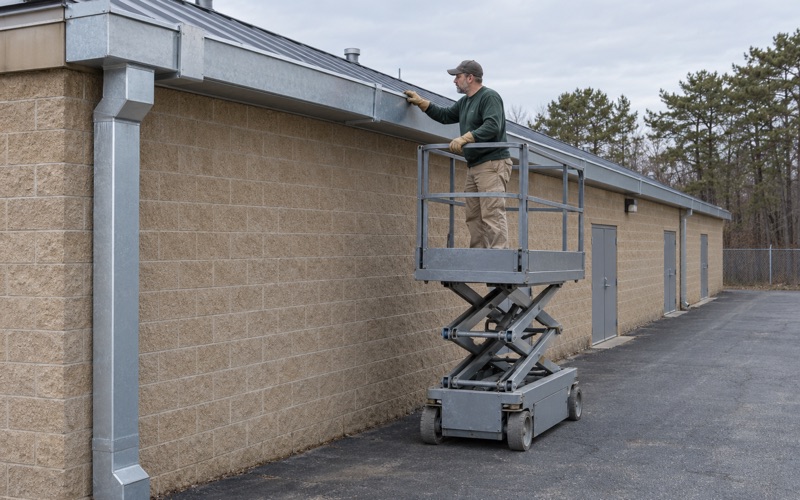
Brick Quality Gutters has spent more than 20 years installing and repairing gutters in Dover Beaches South, and the houses here pose a different problem than most. On a home that stands well above the ground, hanging the gutter is the easy part. The harder part is getting the water from the roof edge to a spot on the lot where it can actually leave.
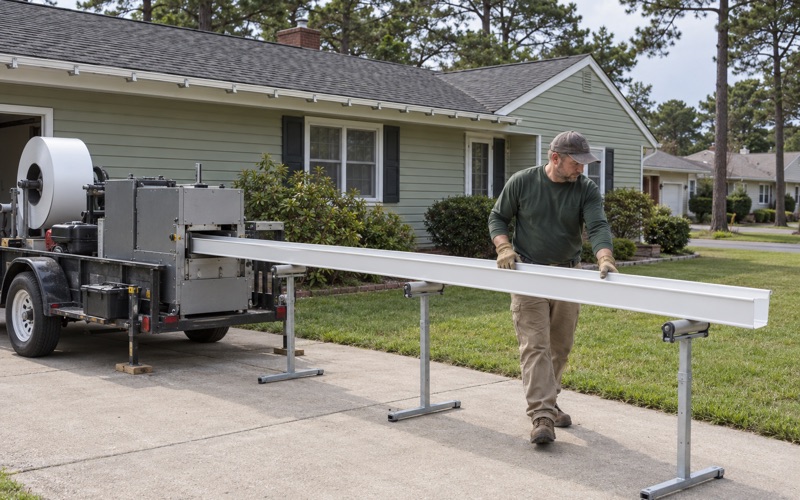
We size each gutter and downspout to the roof area that feeds it, then form the runs on site from coil so a long eave goes up as one seamless piece. From there we trace each downspout to the place it empties, and we propose an extension or an underground line when that place turns out to be the foundation.
This page walks through what that means on raised houses: the long vertical runs, the ground under and beside the piers, the streets that were lifted beside the yards, and how we check a house that may sit empty when a storm comes through. If you own one of these homes and live somewhere else for part of the year, the last section is written for you.
Gutters on Ortley Beach’s Raised Houses
Most people here call the place Ortley Beach, and the census name, Dover Beaches South, rarely comes up in conversation. It is a census-designated place inside Toms River Township, in Ocean County, on the Barnegat Peninsula between Barnegat Bay and the Atlantic. Census figures date 817 of its 2,362 housing units to 2010 or later, a sign of how much was rebuilt after Sandy.
The rebuilt houses tend to stand tall. Toms River Mayor Mo Hill said in 2021 that if you drive around the Ortley Beach area, “a lot of the homes are elevated 8-10 feet.” That is his description rather than a survey of each lot, but it matches what we see from the ladder: on many of these houses the gutter line sits a full story or more above the yard.
A Gutter a Story Above the Ground
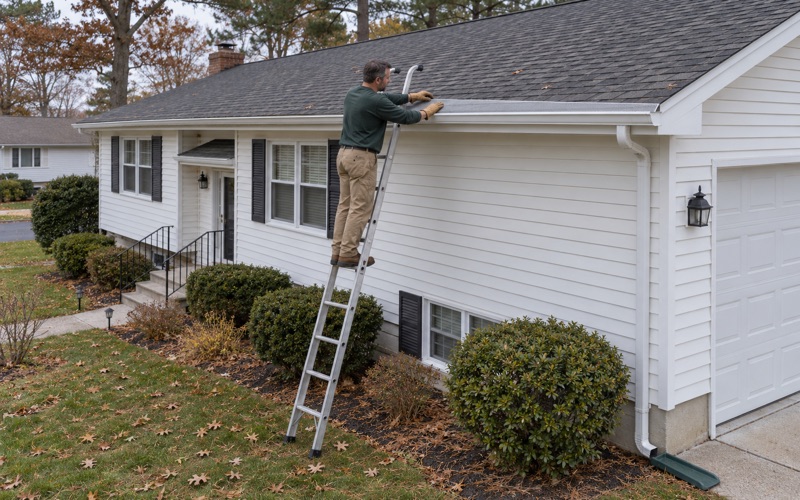
On a house elevated 8-10 feet, the gutter is mounted where a second-floor eave would be on an older cottage. That changes the setup from the first visit. We plan ladder and staging positions around the open ground beneath the house, and we pay closer attention to hanger spacing, because a sagging section that high is harder to spot and harder to reach later.
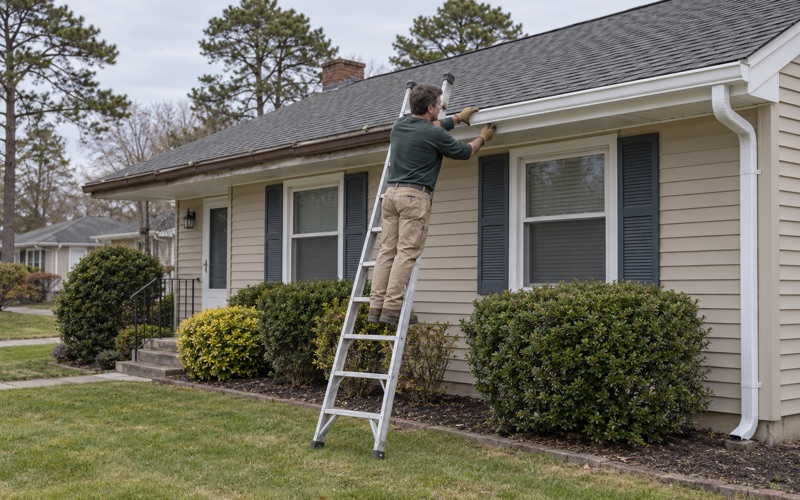
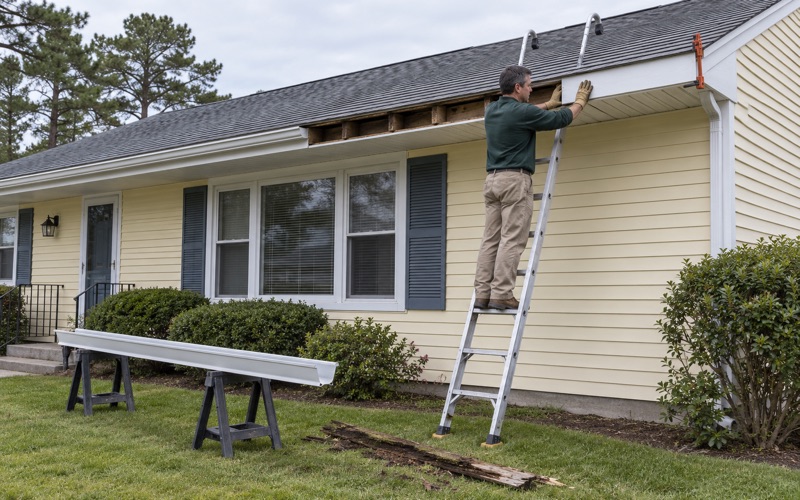
A newer roof usually means newer fascia, but newer does not always mean sound. Before new gutters go up we check the board behind them for soft spots, and if we find any we show the owner the wood before we replace it. Six-inch K-style seamless gutters on hidden hangers are a common choice on these roofs, with the size confirmed against the roof area that drains to each run.
Long Downspout Runs Down the Foundation
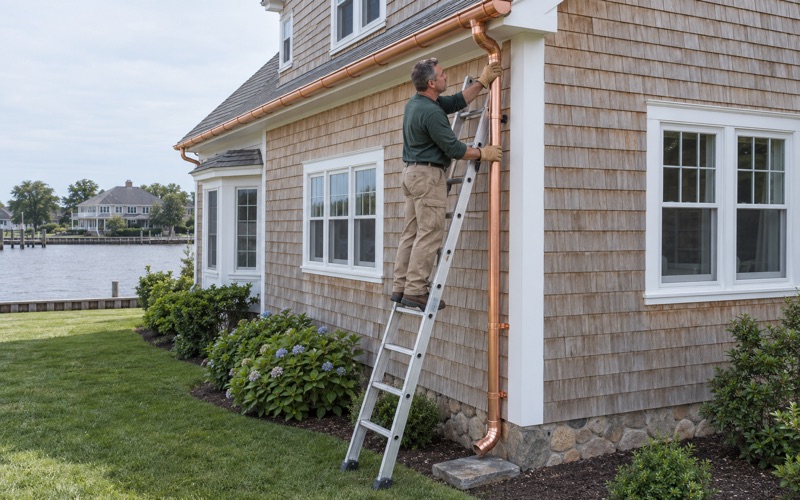
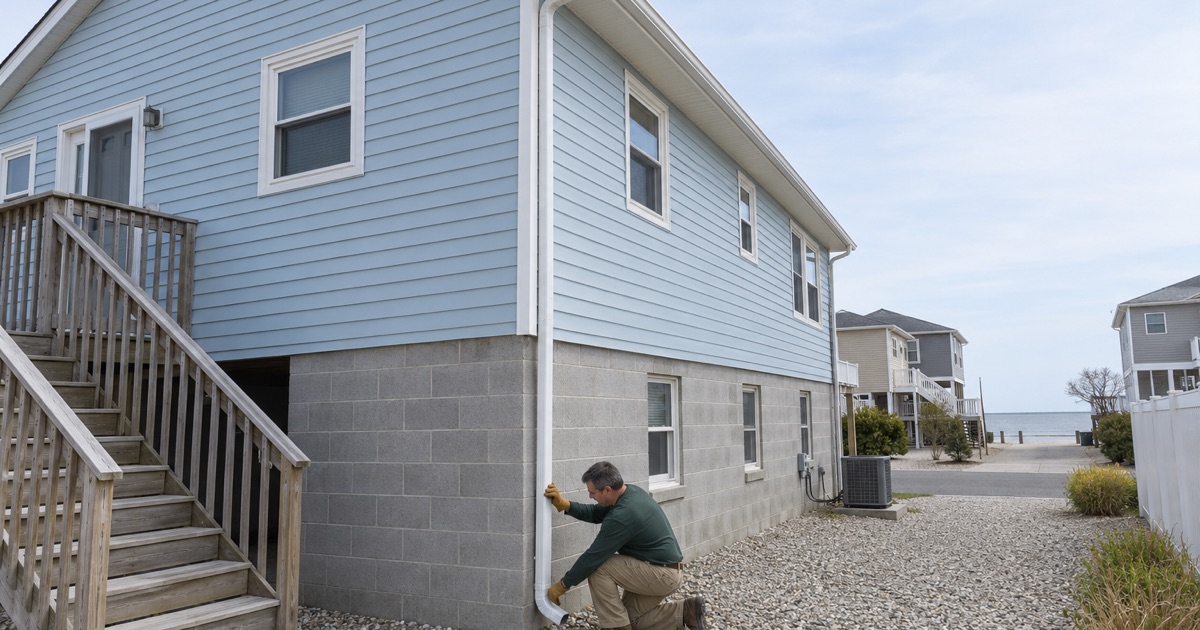
The longer the drop, the more a downspout has to get right. A run that falls the full height of an open foundation needs secure straps along its length, clean A and B elbows where it leaves the eave, and an outlet large enough that the gutter does not back up in a hard rain. We often specify 3x4 downspouts with wide-flange outlets on these houses because they carry more water than the smaller sizes.
Each run is also more exposed than it would be on a house built at grade. Wind catches a tall downspout, and a strap that works loose lets the run swing against the pilings or the stair framing. Where we can, we fasten each run along a post or other solid framing so it stays put and stays clear of the stairs and the parking space below.
Looking for gutters closer to West Belmar? See West Belmar Gutters.
Where the Water Goes Under and Beside a Raised House
Getting water down from the roof is only half the job. Where the downspout lets go decides whether that water leaves the lot or settles in the shaded ground under the house. On an elevated home that discharge point is a design choice, not an accident of where the corner happens to fall.
Under the House, Between the Piers
The space under a raised house is tempting for a downspout, because it is hidden and close by. It is also where many owners park, store beach gear and walk to the stairs, and water dumped there tends to sit in the low spots between piers. We follow each downspout to where its water lands and tell the owner plainly when a run is emptying into that space.
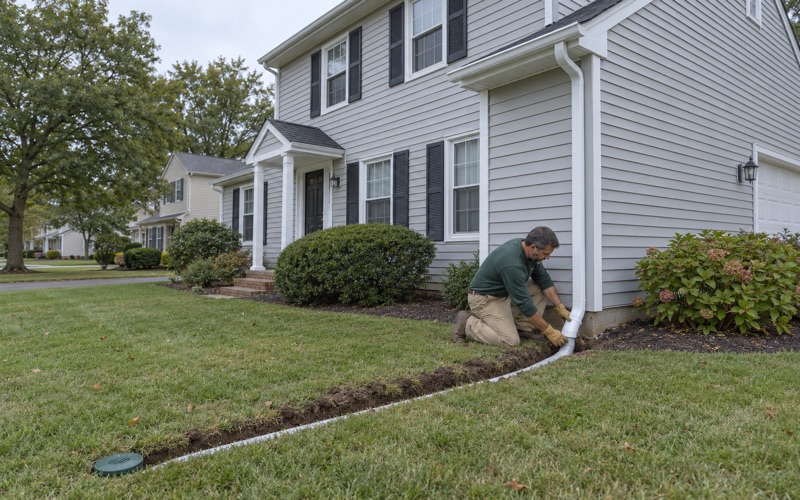
When it is, we usually propose carrying the water past the footprint of the house. That can be a surface extension, an underground downspout line that ends in a pop-up drainage emitter, or a run moved to a different corner. The right answer depends on where the ground falls, and we check that on site rather than guess.
Beside the Foundation and Toward the Lot Line
Some downspouts end right beside a foundation wall or a pile cap. The 2021 New Jersey edition of the IRC, in section R401.3, calls for grade to fall 6 inches within the first 10 feet from the foundation, and a downspout emptying against the wall works against that slope. An extension that sets the water down past that first stretch gives the grade a chance to do its job.
Lots here are narrow, so pushing water away from one wall can push it toward a neighbor. We look at where an extension would send the water before we suggest it, and we lay the choices out on the estimate. New gutters and repair work go on separate lines there, because New Jersey taxes the two differently.
Raised Streets and Yards That Now Sit Lower
The houses were not the only thing lifted. In August 2020, Toms River Township awarded a $2,496,923 contract to raise Sixth Terrace, Mariners Road, Harborside Drive and Spindrift Road and to improve their drainage in order to prevent flooding. Earlier that year the township had reported major success reducing flooding in Ortley Beach through road elevations.
When the Curb Is Higher Than the Yard
A raised street can change how the yard beside it drains. Where the road surface was lifted, the lawn next to it may now sit lower than the curb, and a downspout pointed toward the street can leave water in the front yard instead. The township’s announcement did not say how far any street was raised, so we treat each lot on Harborside Drive and the streets around it as its own case.
On a lot like that, we read the yard before we decide where the downspouts go. If the front yard has become the low point, sending more roof water toward it only adds to the puddle. Sometimes the better route is to the side or rear of the house, or into an underground line that carries the water to ground that drains.
Roof Water and the Township’s Storm System
The Toms River storm sewer code defines the township’s system to include municipal streets, catch basins, curbs, gutters and ditches. It bars connecting sewage and wastewater to that system, and it defines stormwater as rain and snow that runs off the land. We found no township section that names downspouts or roof leaders, so we do not tell owners a local downspout rule exists.
What the code does make clear is that roof water is stormwater. The underground lines we install carry only what comes off the roof. If an older line on the property ties into something other than the yard or the street, we point it out to the owner rather than connect new work to it.
Checking Gutters on a Seasonal House After a Storm Tide
Most housing in Dover Beaches South is seasonal. Census figures count 1,464 of 2,362 units as held for seasonal, recreational or occasional use, about 62.0 percent. Many owners may not be here in the offseason to notice a downspout that came loose or water pooling under the house.
What We Look For After the Weather
A storm does not have to be a hurricane to move things around. In late October 2025, heavy rain and high tides flooded coastal towns in northern Ocean County, and Route 35 south was flooded in Ortley Beach. After weather like that we look for downspouts knocked loose, elbows pulled apart at the bottom of long runs, and extensions shifted or buried.
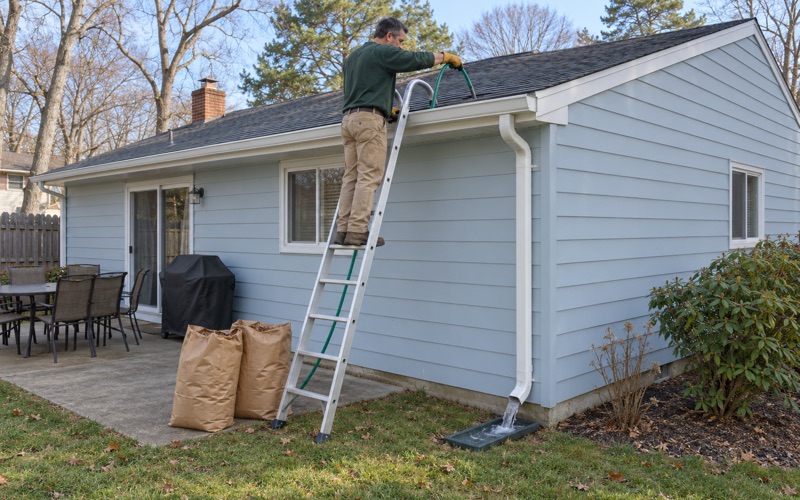
We also check the gutters themselves for sag, debris and seams that have let go. Cleaning visits flush each downspout from top to bottom and bag what comes out, so nothing is left on the yard or in the street. A downspout that drops 8 to 10 feet before it reaches the ground is worth flushing, since a clog at the bottom elbow can back water up the whole run.
Photos for Owners Who Are Away
Owners who live elsewhere for most of the year cannot walk outside and look. That is why each cleaning and repair comes with before-and-after photos, so you can see the gutter line, the downspouts and where each one empties without making the drive. If something needs work, the photos show it before the estimate does.
Ortley Beach still has older houses among the rebuilds, including 493 units the Census dates to the 1950s. Some of those cottages sit close to the ground and carry shorter runs, but the same question about where the water goes applies. We plan each house on its own terms, whether it stands on piers or sits near grade.
Paperwork That Holds Up Later
Many houses here were rebuilt or substantially improved after Sandy, and owners sometimes want a clear record of later work. FEMA’s desk reference, P-758, lists roofing, gutters and downspouts among the costs counted toward substantial improvement under the 50 percent rule. That alone does not make a gutter job a flood-rule matter, but it is one reason we itemize the work line by line.
Our contracts are written to New Jersey’s home improvement rules, including the three-day cancellation notice. The estimate names the gutter size, the downspout size and where each run will discharge. You know before we start exactly what goes on the house and where the water will go.
- 20+ Years Experience
- Free Written Estimates
- Before-and-After Photos