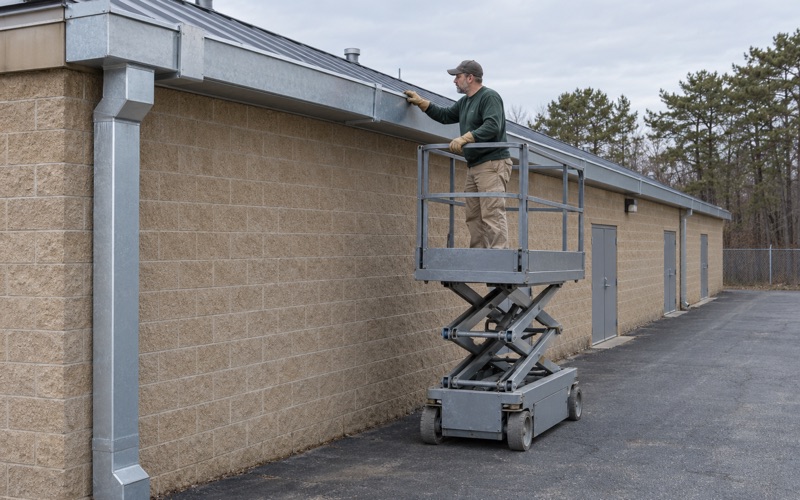
Brick Quality Gutters has spent more than 20 years installing and repairing gutters in Dover Beaches North, and on the bay side of this stretch the job starts with a question most gutter crews skip: where does the roof water go once it leaves the downspout? A gutter that collects well but empties into a flooded street has only moved the problem a few feet.
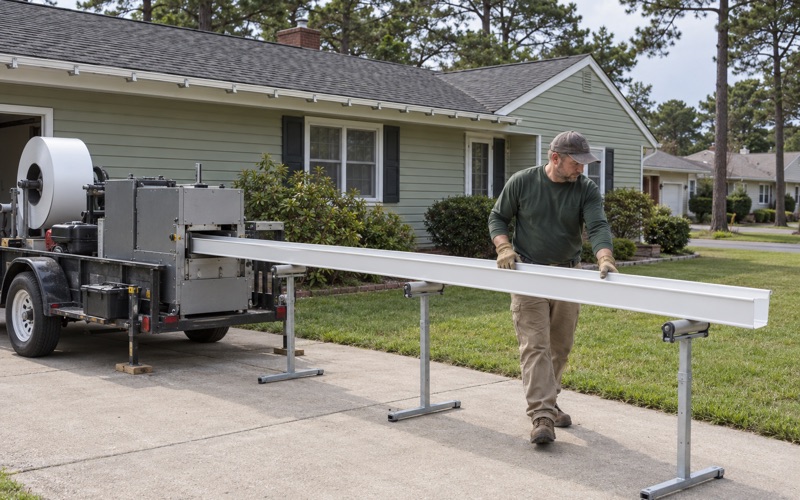
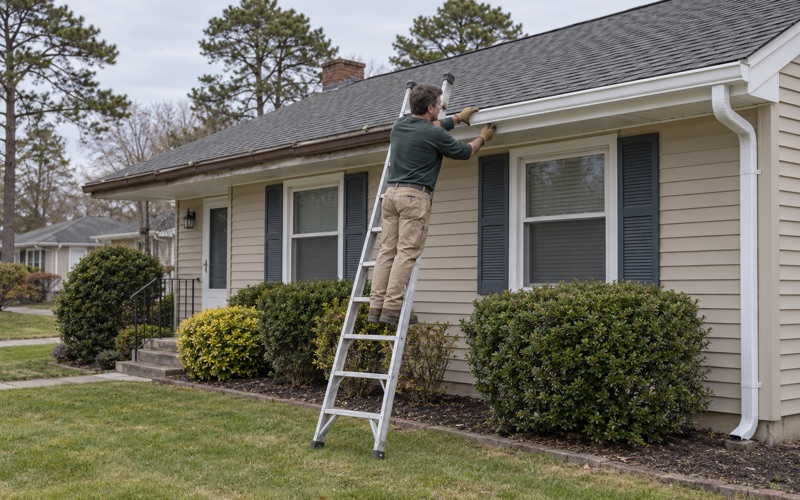
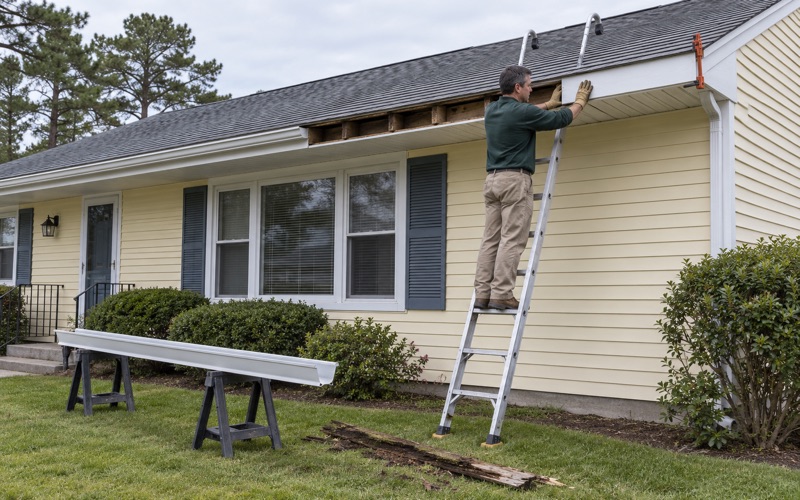
We size each gutter and downspout for the slice of roof that actually drains into it, then form seamless runs on site from coil so every side of the house gets one continuous piece. Before anything is hung, we check the fascia board for rot and show the owner any soft wood we find, so the decision to replace it is theirs and not a surprise on the invoice.
The second half of the work happens on the ground. We walk every downspout to the spot where its water lands and look at what that spot does when the bay is high. When the answer is that water sits against the foundation or pools under the stairs, we propose a different outlet before we propose anything else.
When the bay comes up through Normandy Beach streets
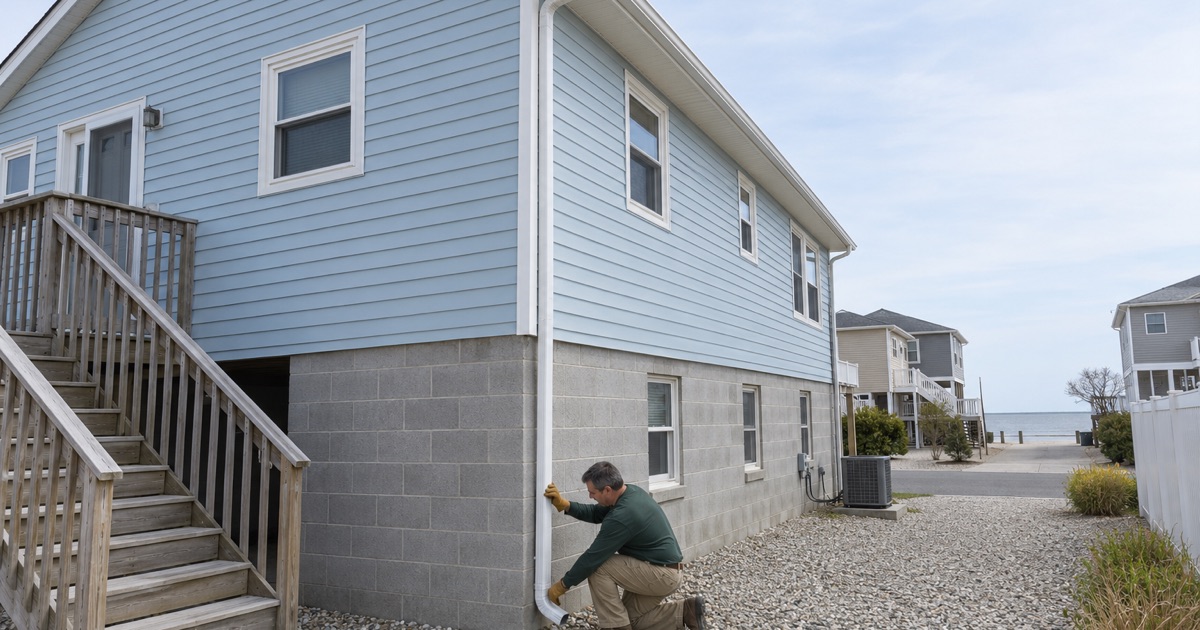
Many owners on the bay side already know the pattern, even if nobody has written it down for their block. The flooding here does not always come from rain or from the ocean. It comes up from Barnegat Bay, through the street, on tides that line up with storms and full moons.
What residents told the councils
In May 2020, the Toms River and Brick councils both voted unanimously to seek state funding to raise streets in what the Toms River Shorebeat called the “oft-flooded Normandy Beach section,” a neighborhood split between the two towns. Residents described missing school, work and even deliveries because of flooding “at high tide during storms or full moons.”
The plan named Broad Avenue and 5th Avenue on the Toms River side. We keep our attention on the Toms River half of Normandy Beach, which sits inside Dover Beaches North along with Chadwick Beach, the Ocean Beaches, Silver Beach and Normandy Shores.
Why storm drains stop draining at high tide
A storm drain works only when the pipe behind it has somewhere lower to empty. On the bay side, the outfall pipes discharge toward the bay, so when the bay rises above those outlets the drains have nowhere to send water. In the same report, Toms River Mayor Maurice Hill said, “The flapper valves, as we know, don’t work, particularly when the tide is high.”
That was the mayor’s view, given while Brick was trying newly designed valves and Toms River had largely set them aside. He also said raising streets “doesn’t eliminate the flooding totally.” For a homeowner, the practical point is simple: on a high-tide day, the catch basin at the curb may already be full.
What that means for roof water
Most gutter systems on these blocks were set up on the assumption that the street would take the water. When the street is underwater, a downspout aimed at the curb is pouring roof water into standing water that has no outlet. We think it is reasonable to expect that water to back up into the yard, the driveway or the foundation line, though no one has measured how often it does on a given lot.
So we plan downspouts for the worst tide, not the average afternoon. That means asking where water should go when the street cannot accept it, and building the system around that answer.
Looking for gutters closer to Manasquan? See Gutters in Manasquan.
Where downspouts should send water on a bay-side lot
Toms River Township treats curbs, gutters, catch basins and storm drains as part of its municipal separate storm sewer system under Chapter 421, Article III of the township code. A search of that code for “downspouts” and “leaders” turned up no section on where a downspout must discharge. That leaves the choice to the owner, and it is worth making on purpose.
Keeping water off the foundation
The 2021 New Jersey edition of the residential code, at R401.3, calls for grade to fall 6 inches within the first 10 feet from the foundation. On some older beach houses the sand around the house has shifted over the years, and grade that once sloped away may now sit flat or tip back toward the house. A downspout dropping onto flat sand just digs a hole beside the footing.
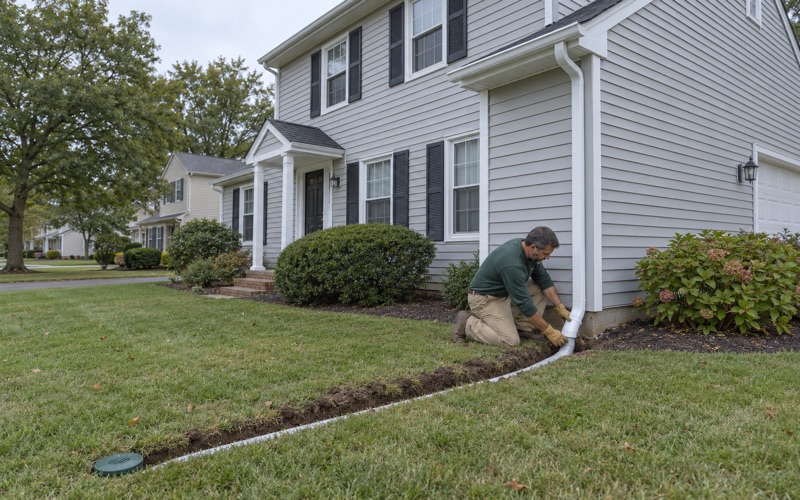
When we find that, we suggest a longer extension, a splash block set to carry water out, or an underground line to a pop-up drainage emitter placed where the yard is lowest and farthest from the house. We note on the estimate which option fits the slope we measured, rather than defaulting to the one that is easiest to sell.
Planning for the days the curb cannot help
An underground line that empties to the street works on a dry day and stalls on a tide day. On lots that see bay water in the street, we prefer outlets that discharge onto the owner’s own ground, away from the house, where sand can absorb water once the tide drops. Where the lot is too small for that, we talk through which corners of the house can tolerate a short delay and which cannot.
Downspout placement can change too. Moving a downspout from the low street side of the roof to a higher side yard sometimes takes most of the pressure off a problem corner. We would rather add an outlet and an extra elbow than leave one downspout carrying half a roof toward a flooded curb.
Sizing for the roof, not the habit
Bigger downspouts help only when the outlet they feed can take the water. We pick 6-inch K-style seamless gutters with 3x4 downspouts where the roof area calls for them, and smaller profiles where it does not. Wide-flange outlets and clean A and B elbows keep water moving into the extension instead of spilling over the gutter edge at the corner.
Fewer seams also matter here. Seamless gutters formed from .032 aluminum gutter coil leave joints only at the miters and outlets, which we seal with tripolymer gutter sealant. That cuts down the places where a drip lands on a deck board or a stair that was already damp.
Gutters on lagoon and bay-side houses on the northern beaches
The bay side of Dover Beaches North includes Chadwick Island and Normandy Shores, which sit along lagoons. On a bulkheaded lagoon lot, the distance from a downspout to open water can be very short. We did not find any rule on discharging roof water over a bulkhead, so we treat that as a question for the owner and their association documents rather than something we decide alone.
Hangers and hardware near the water
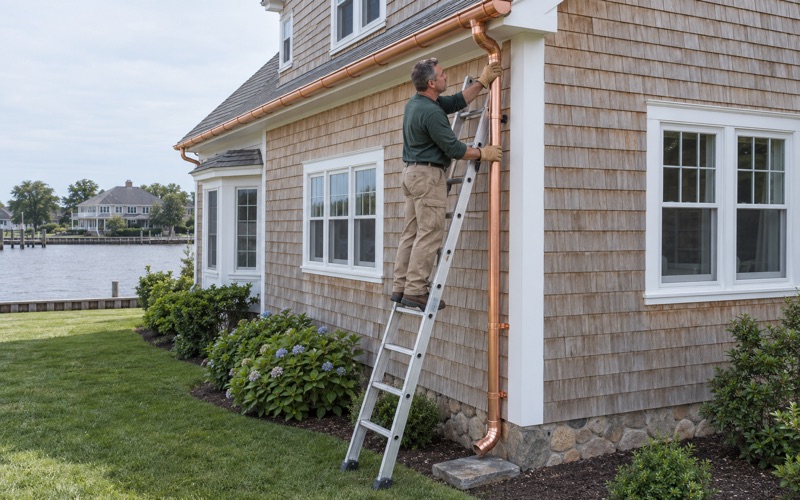
Bay-side houses sit in damp, salty air that works on fasteners. We choose hangers, screws and sealants with that in mind and name the materials on the estimate so the owner can compare them. Hidden hangers usually hold a long run more evenly than spike and ferrule, and they leave fewer holes for water to find.
At the roof edge, we look at the gutter apron and drip edge so water lands in the trough and not behind it. Where a roof meets a sidewall, a kickout flashing turns water into the gutter instead of down the siding, which matters on houses with additions and stepped rooflines.
Matching guards to what actually falls
Some bay-side lots have few trees close to the roof. Guards are worth it only when debris is the real problem, so we look at what is overhead before recommending one. Where windblown sand, shingle grit or leaves collect, stainless steel micro-mesh gutter guards can keep outlets open without trapping water at the edge.
Where there is little overhead debris, we often recommend skipping guards and planning a cleaning schedule instead. A clean, open outlet is what keeps water moving toward the extension during a storm tide.
Older houses and painted trim
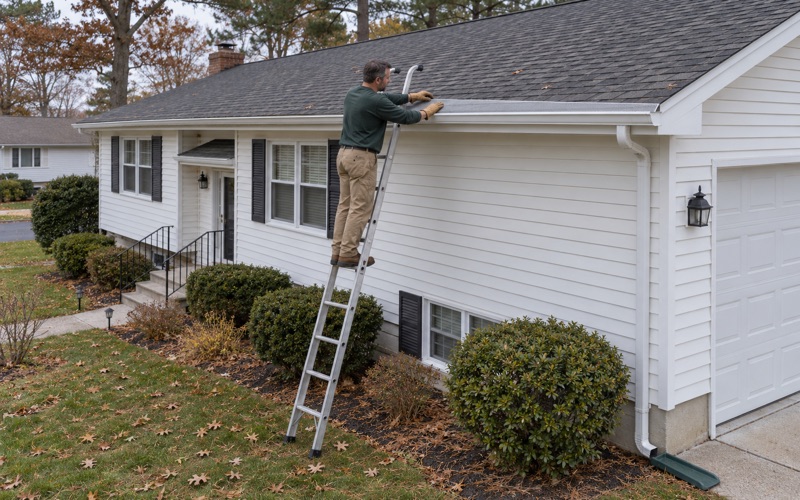
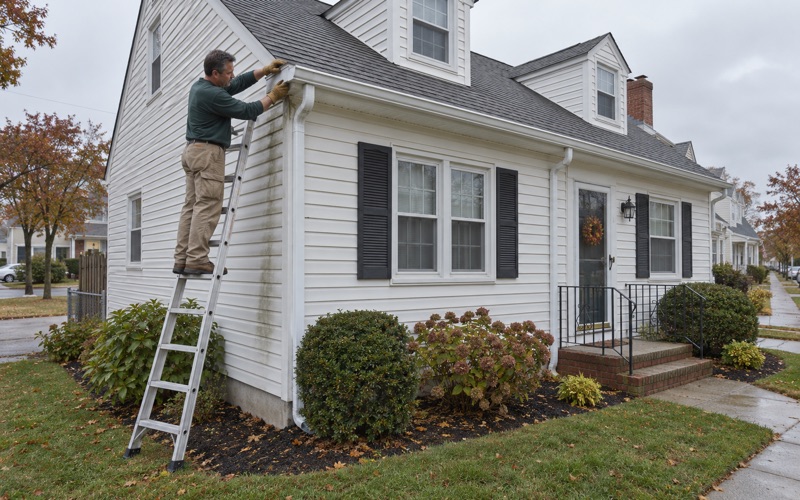
The housing stock here mixes newer builds with a large share from the 1950s and 1960s, according to Census estimates. On houses built before 1978, painted fascia and trim fall under the EPA Renovation, Repair and Painting rule, so we plan work on those boards with that rule in mind. We also check the fascia behind the old gutter before the new one goes on, because a damp board can hide soft spots until a hanger pulls loose.
On estimates, we list new gutters and repair work on separate lines. New Jersey treats new gutters as an exempt capital improvement on Form ST-8, while repairing gutters is a taxable repair, and owners should see which is which before they sign.
Checking a closed-up beach house after a storm tide
Census estimates show that 3,015 of the 4,256 housing units in Dover Beaches North are held for seasonal or occasional use, about 70.8 percent. A clogged outlet or a downspout knocked loose by wind can go unnoticed for weeks when nobody is home, and the first sign may be a stain or a sagging run that shows up in spring.
What we look at after the water drops
After a storm tide, we check that every downspout is still attached and that extensions have not floated away or filled with sand. We look for runs that have pulled away from the fascia, outlets packed with debris and elbows that were crushed underfoot or by moving water. Splash blocks are often the first thing to wander.
We also look at the ground. If water has scoured a channel next to the foundation or left a line of debris against the siding, that tells us where roof water and bay water met. That evidence guides whether an outlet needs to move before the next high tide.
Photos for owners who are not here
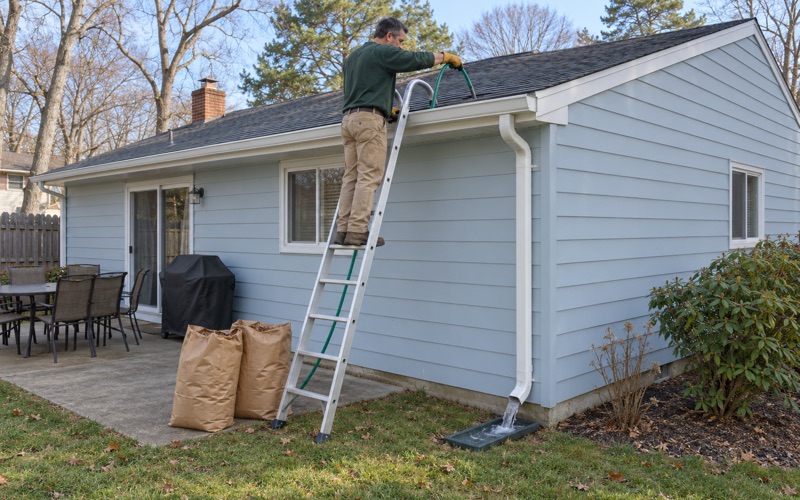
Every cleaning and repair visit comes with before-and-after photos, which is useful when the owner lives elsewhere for most of the year. On cleaning visits, we flush each downspout and bag the debris so nothing is left on the lawn or washed into the street drain. The photos show the outlet clear and the extension back where it belongs.
Paperwork owners can rely on
Under N.J.A.C. 5:23-2.7(c)1.xvi, repairing, replacing or installing exterior gutters and leaders counts as ordinary maintenance, so most gutter jobs need no construction permit, and we write contracts to New Jersey’s home improvement rules, including the three-day cancellation notice. If you are buying a bay-side house, a home inspector must inspect and report roof drainage problems under N.J.A.C. 13:40-15.16, and that report is a good starting point for our visit.
- 20+ Years Experience
- Free Written Estimates
- Before-and-After Photos