Brick Quality Gutters has spent more than 20 years installing, repairing and cleaning gutters in Brielle, and the work here starts with a question most towns never raise: how close is the house to tidal water? That answer shapes the metal we hang, the hardware that holds it and where each downspout is allowed to send its water.
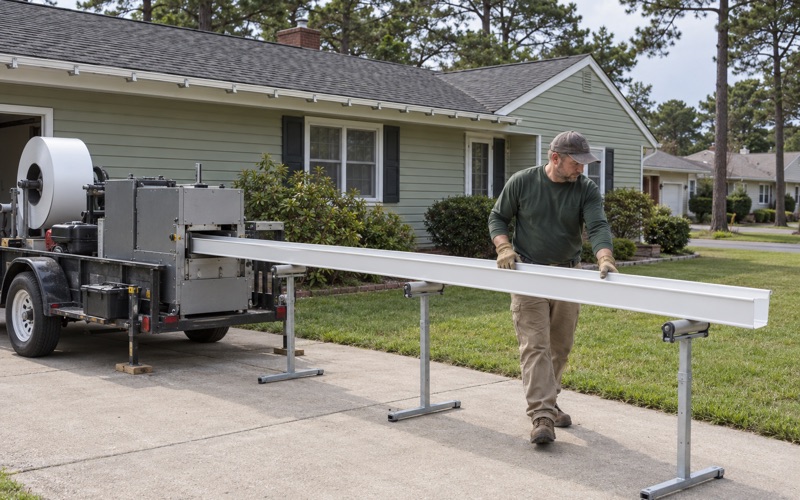
We form seamless gutters on site from coil, one continuous piece for every run of the house, and we size each gutter and downspout to the roof area that actually drains into it. A deep valley over a back porch gets a different outlet than a short run over a garage, because the water volume is different, and guessing at it is how overflow starts.
Every estimate names the materials it uses, lists new gutters and repair work on separate lines and follows New Jersey’s home improvement contract rules, including the three-day cancellation notice. If you own a house in the borough and want a clear plan for its roof drainage, the sections below explain what we look at and why.
Gutters Along the Manasquan River, Glimmerglass and Debbie’s Creek

Brielle is a river town before it is anything else. The borough has about 4.0 miles of salt-water tidal waterfront on the Manasquan River, Glimmerglass and Debbie’s Creek, and roughly a quarter of its 2.37 square miles is water. That shoreline winds through a small land area, so tidal air reaches far more streets than a map of the riverbank alone suggests.
Brackish Air Counts as Salt Air
Many owners assume corrosion warnings are written for oceanfront houses only. The manufacturers disagree. Englert’s prepainted aluminum warranty (Rev 7, 2022) applies its half-mile rule to product located near “a seacoast, salt water, or brackish water,” and brackish is exactly what the Manasquan carries past Brielle’s docks and backyards.
Under that rule, the owner is expected to give the metal an annual fresh-water rinse and keep records of it. The clause names roofing, fascia, soffit and siding rather than gutters, but the logic carries straight across: the same salt film settles on every painted aluminum surface near the river, and it does its slow work whether anyone reads the warranty or not.
What Other Warranties Exclude
Alside’s 20-year rainware warranty excludes damage from “exposure to corrosive atmospheres (such as those containing sea salt).” We have not measured which Brielle houses sit within half a mile of tidal water, but with that much shoreline in 1.76 square miles of land, many likely do. We treat a riverfront address as a salt-air job from the first visit.
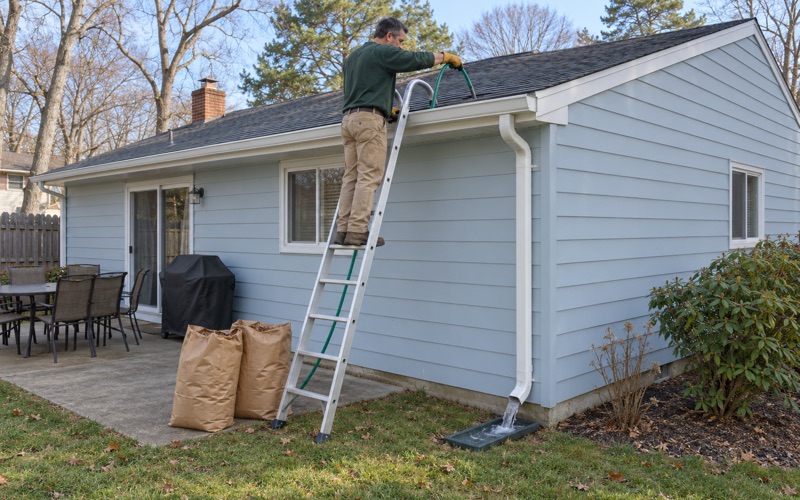
That means telling you up front which coverage terms may not apply to your house, and building the system so it holds up without relying on them. It also means planning a rinse into the maintenance schedule, which takes a garden hose and a few minutes after the fall cleaning, rather than leaving it for a warranty claim to raise.
Tidal Water and the Backyard
Waterfront lots in Brielle often slope down toward a bulkhead, a lagoon edge or a lawn that meets the creek. Gutters on those houses collect water that has a short trip to make once it leaves the downspout. Where it lands, and how fast it runs toward the water, is the second half of every riverfront job we quote.
Looking for gutters closer to Point Pleasant Beach? See Gutters in Point Pleasant Beach.
Where Brielle Downspouts Can and Cannot Drain
The borough’s sewer code settles one option before any design work begins. Brielle code § 15-2.6b states that “no roof leaders, no sump pumps, no down spouts shall be connected to the sewer system.” A tie-in that seems convenient during a renovation is a violation, and § 15-2.6d lets the borough discontinue sewer and water service, add a surcharge or seek a fine.
Roof Water Stays on the Lot
With the sewer off the table, every Brielle downspout discharges onto the property. We found no borough rule that forbids discharge onto a lawn or requires a particular fixture, so the choice is a design decision rather than a permit condition. Our job is to make that discharge work for the house instead of against it.
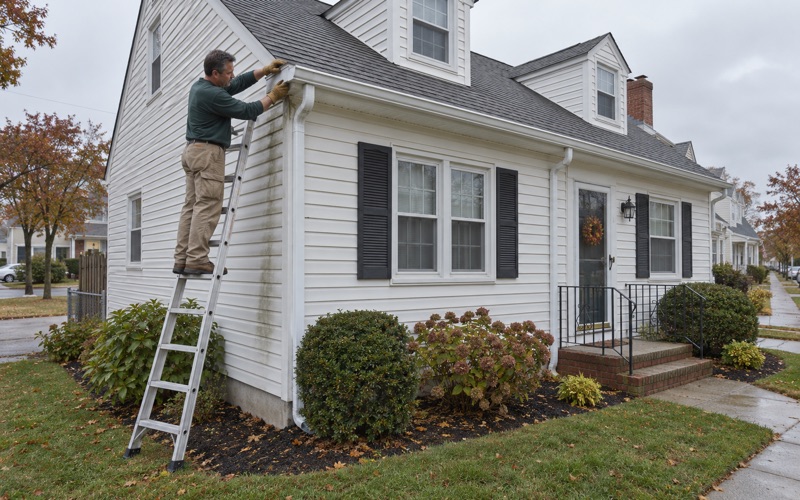
We follow every downspout to the spot where its water lands. When it empties against the foundation, beside a basement window or into a planting bed that already stays wet, we propose a fix and show you the reason on site. Most fixes are simple: a longer extension, a turn toward open lawn or a short underground line.
Grading Toward the Water Without Washing the Yard
New Jersey’s edition of the 2021 residential code, R401.3, calls for grade to fall 6 inches within the first 10 feet from the foundation. On a riverfront lot that slope is usually there, sometimes steeply. The risk shifts from water pooling at the house to water running hard across the lawn and carrying soil toward the bulkhead.
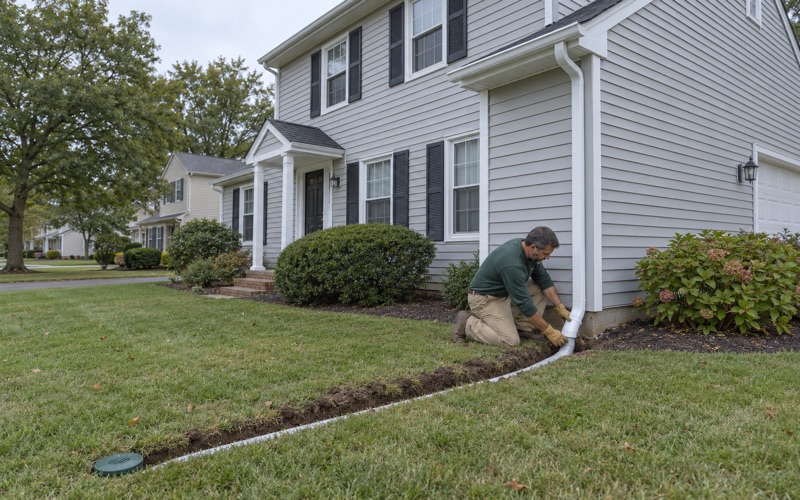
For those lots we often split the flow among more downspouts so no single outlet carries a whole roof plane. Underground downspout lines that end in pop-up drainage emitters let water surface farther out and spread across grass instead of cutting a channel. We set the emitter where the lawn can absorb it, not at the top of the slope.
Sump Pumps Are a Separate Question
Owners sometimes ask whether a sump discharge can share a downspout line. The same sewer section bars sump pumps from the sewer, and the borough’s stormwater rules treat basement sump pumps under their own exception. We keep roof drainage and sump discharge on separate lines so each one can be inspected and cleared on its own.
Seamless Aluminum, Copper and Fasteners Near Tidal Water
Most Brielle houses are detached single-family homes, and the system we install on them most often is 6-inch K-style seamless gutters in .032 aluminum coil with 3x4 downspouts. That combination handles a typical roof well, and forming it on site means there are no seams along the run for salt film and standing water to work into. Corners get box, strip or bay miters cut to fit.
Hangers and Sealant Chosen for Salt Air
The gutter itself is rarely the first part to fail near brackish water. Fasteners, hangers and seams go first. We use hidden hangers rather than spike and ferrule, choose fasteners suited to salt exposure and seal miters and end caps with tripolymer gutter sealant. The estimate names each of those materials so you can see what is going up.
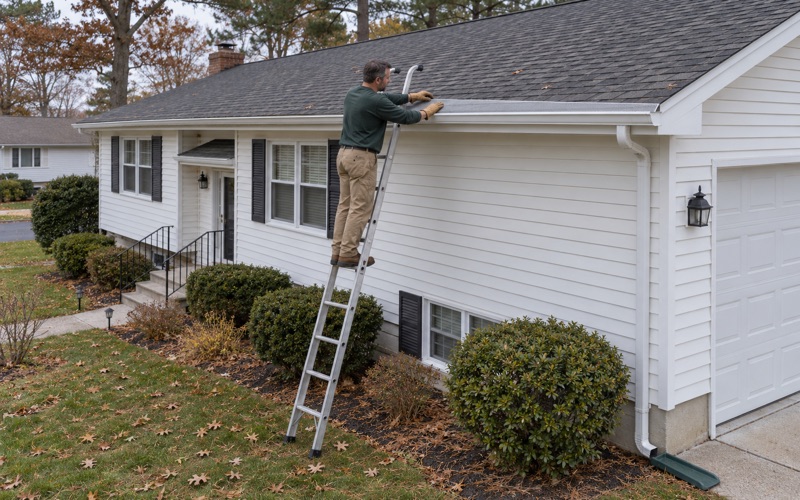
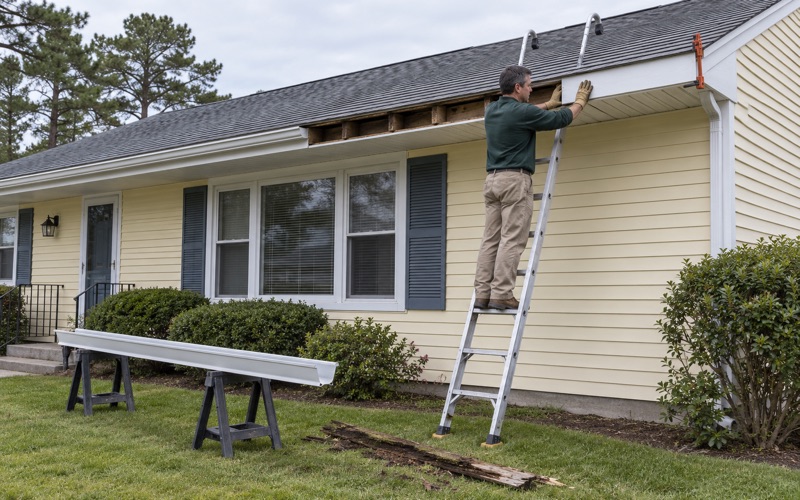
Before new gutters are hung, we check the fascia board behind them. Soft or rotted wood is shown to you before we replace it, because a new gutter fastened to bad fascia will pull loose. On houses built before 1978 with painted trim, the EPA Renovation, Repair and Painting rule governs how that disturbed paint is handled.
Flashing Where Roof Meets Gutter
Gutter apron and drip edge carry roof water past the fascia and into the trough, and kickout flashing turns water away from walls where a roof edge dies into siding. On a riverfront house exposed to wind off the water, those details matter more, because driven rain finds every gap behind a gutter that was hung without them.
Copper and Half-Round on Older Houses
Brielle has 373 housing units built before 1940, and some of those houses suit half-round gutters with a double-bead profile or 16-ounce copper that weathers to a patina. We match the profile to the age and style of the house. Copper also holds up well in salt air, which makes it a practical choice as well as a period one.
Mixing metals takes care. Alside’s warranty is void where copper sits on the roof or anywhere water may be directed into aluminum gutters, because the runoff corrodes the aluminum. If a house has copper flashing or a copper bay roof, we plan the system so that water never drains into an aluminum run.
Fall Cleaning and Upkeep on Riverfront Lots
Brielle’s lots are mature, and about 90.5% of its occupied homes are owner-occupied, so many of the trees overhead have been growing over the same roofs for decades. Oak leaves and pine needles fill gutters differently, and a cleaning schedule that ignores which one drops on your roof tends to miss the heavy weeks of fall.
Guards Matched to What Falls on the Roof
Oak leaves sit on top of a screen and blow off; pine needles slide into wide openings and lodge there. We look at the trees around the house before recommending a guard. Stainless steel micro-mesh gutter guards stop needles and also hold up well in salt air, which makes them a common fit on wooded riverfront lots.
Every Downspout Flushed, Every Bag Carried Out
A cleaning visit is not finished when the troughs look empty. We flush every downspout and underground line to confirm water moves all the way through, then bag the debris and take it with us. Nothing is left on the lawn, in the driveway or blowing toward the street or the water.
The same visit is a good time for the annual fresh-water rinse the warranty language describes. Running clean water through the gutters and over the painted aluminum after the leaves are out removes the salt film that builds up over a season near the river, and it costs nothing beyond the time already on site.
Photos for Owners Who Are Not Home
A share of Brielle’s houses are second homes, with 105 counted as seasonal vacancies in the latest census estimates. Every cleaning and repair comes with before-and-after photos, so an owner who is away can see the condition of the gutters, the fascia and each downspout outlet without driving down to check.
Associations and Paperwork
Where a house belongs to an association, we check the master deed or management office first so the owner knows who is responsible for the gutters before any work is scheduled. New gutters are an exempt capital improvement in New Jersey, while repairs are taxable, so the estimate keeps them on separate lines to make that clear.
- 20+ Years Experience
- Free Written Estimates
- Before-and-After Photos