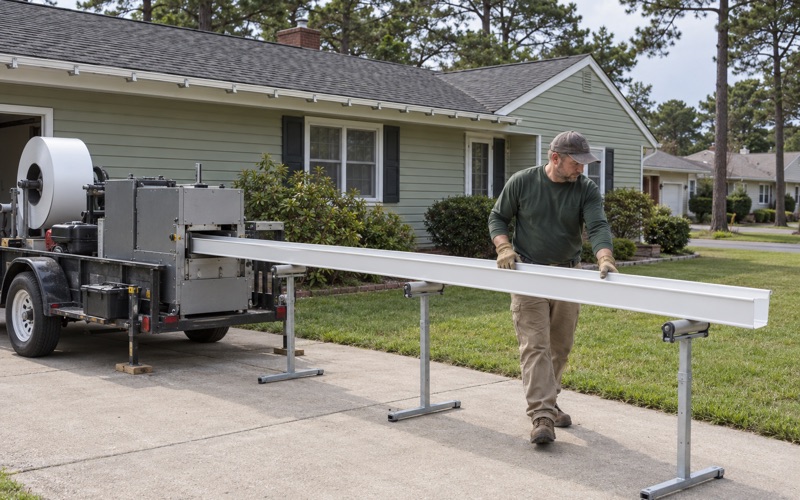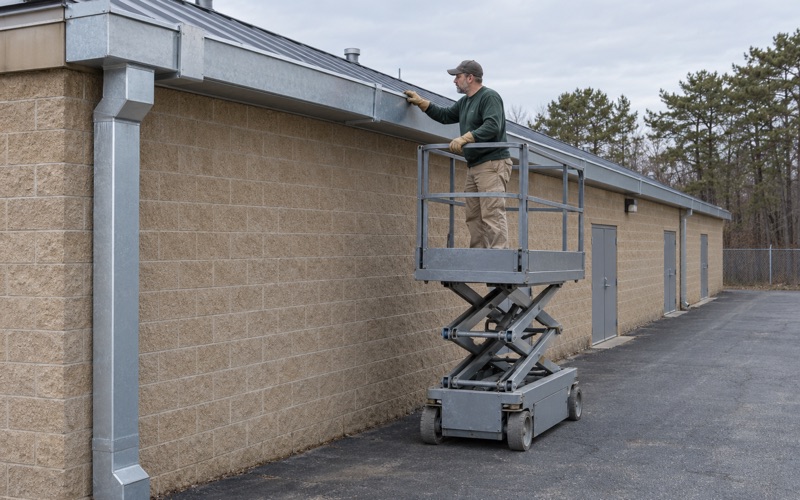
Brick Quality Gutters has spent more than 20 years installing, repairing and cleaning gutters in Belmar and along this stretch of the Shore, and the work here starts with one question: where does the roof water go once it leaves the downspout? On a lot of Belmar blocks the answer changes with the tide. We size each run for the roof area that drains into it and form seamless gutters on site from coil, one piece per run.
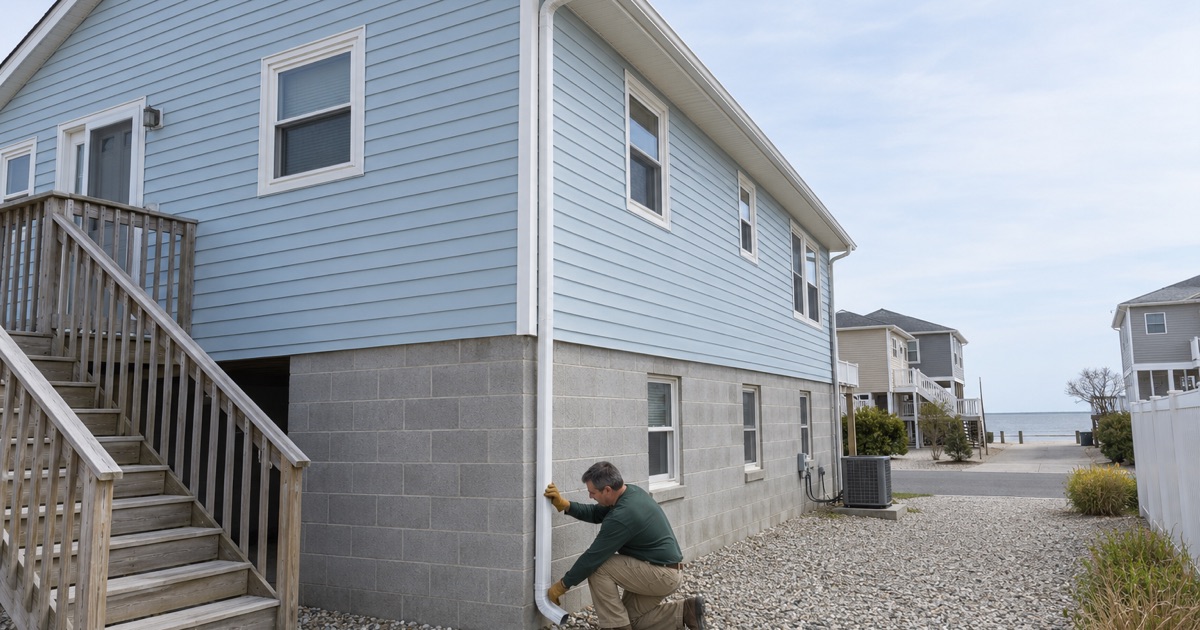
A new gutter system is only half the job if the downspouts still empty onto a driveway that turns into a pond. We follow every downspout to the spot where its water lands, and when that spot is against the foundation or out toward a street that floods, we propose an extension or an underground line instead. The estimate says what we found and what we suggest, in writing.
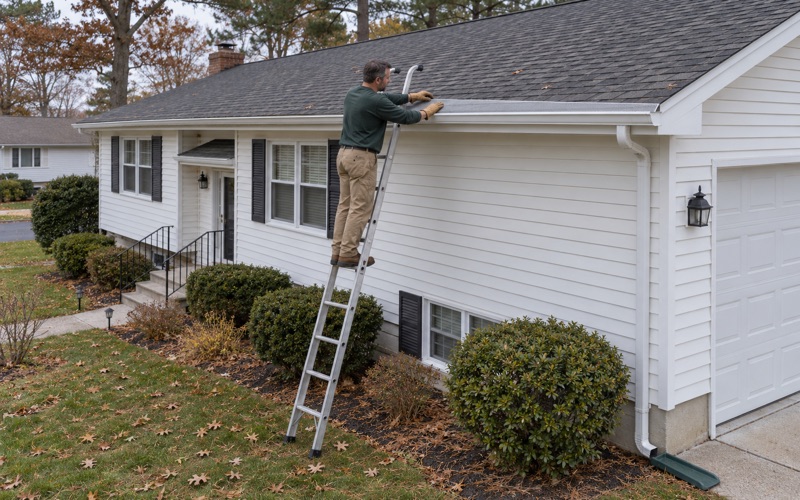
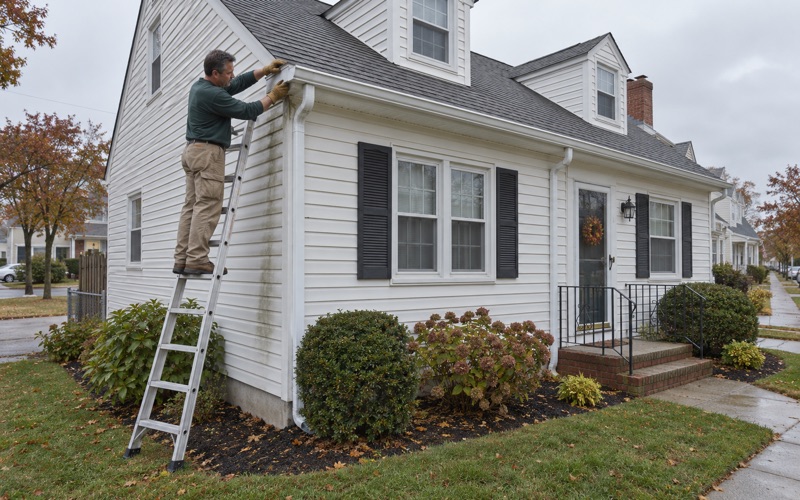
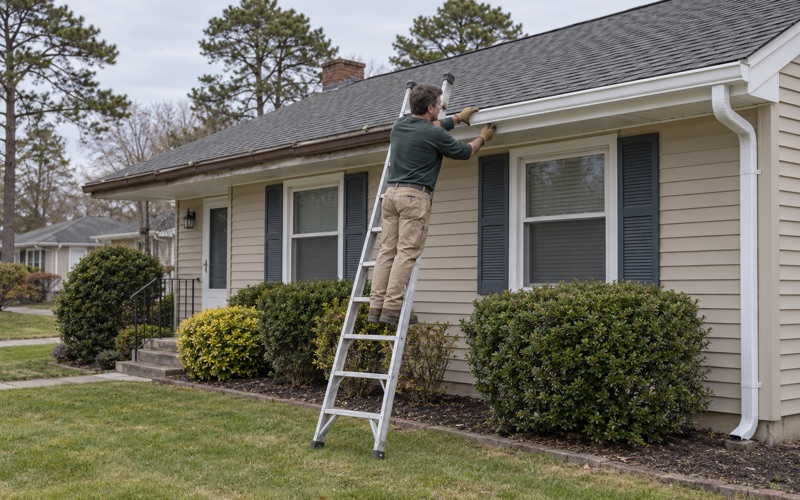
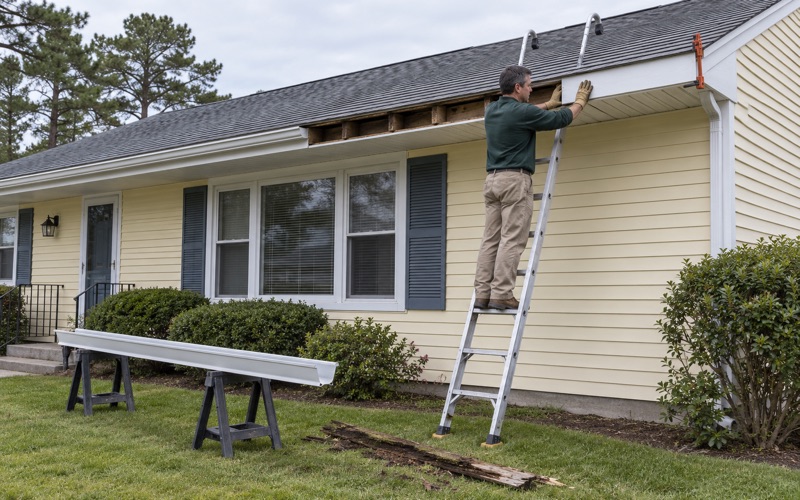
Older houses get a careful look before anything new is hung. We check the fascia behind the old gutter for rot and show the owner any soft wood before we replace it. Hangers, fasteners and sealants are picked for salt air, and the material is named on the estimate so nobody has to guess what is holding the gutter up.
Belmar on the Shark River, When Rain and Tide Arrive Together
A borough with a river along its north edge
Belmar is a borough of roughly 5,900 people on the Jersey Shore in Monmouth County, with the ocean on one side and the Shark River estuary along its north edge. The borough covers 1.61 square miles, and 0.57 of that is water, which says a lot about how close the river sits to the houses. The municipal marina is on the river, and so are many of the blocks where we spend the most time thinking about drainage.
That river is the reason gutter work here is different from gutter work a few miles inland. A gutter on a Belmar house does the same job as anywhere else, catching the roof’s water and moving it to a few downspouts. What changes is what happens at the bottom of those downspouts when the river is high.
What News12 reported in August 2026
In an August 24, 2026 report, News12 New Jersey said flooding around the Shark River basin has become more common in recent years, with flash flooding from heavy rain and tidal flooding from storms happening on average more than a half dozen times a year. That figure covers the whole basin rather than one spot in town. A resident who lives a block from L Street Beach put it more plainly: “Our street floods constantly.”
The same report named the bulkhead that separates Route 35 from the Shark River as one of the problem spots already identified in Belmar. Mayor Caitlin Donovan said the fix “starts right here by making the bulkhead behind me stronger.” That is a borough project, not ours, but it tells homeowners near the river where the water tends to push in.
Rain and high water on the same day
The hard days are the ones when a storm brings heavy rain and raises the river at the same time. Roof water still has to go somewhere, and on a low lot near the river, a downspout that empties toward the street or a storm inlet meets water that is already standing there. We can’t say how often any one yard ponds, but the flooding reports make it a fair thing to plan for.
That’s why we ask Belmar owners where water sits after a storm before we draw up a downspout layout. A wet corner of the yard, a stained foundation wall or a soggy side path is often the first sign that a downspout is dumping in the wrong place. Those clues shape where every outlet goes.
Looking for gutters closer to Cedar Glen West? See Cedar Glen West Gutters.
Why Roof Leaders Can’t Go Into Belmar’s Sewer
What Section 29-9.2 says
Belmar’s Borough Code handles sewer connections under Chapter 29, the Water-Sewer Utility Department. Section 29-9.2, Prohibited Sewer Connections, opens with this: “No cellar drains, no area drains, no roof leaders, no sump pumps, no downspouts and no garbage and refuse shall be connected to the public sewer.” A roof leader is the older word for a downspout, so the rule reaches exactly the pipes we install.
In plain terms, rainwater from the roof may not be piped into the sanitary sewer. That makes sense when you picture a heavy storm on a flooded day, since the sewer is meant for household wastewater and a borough full of roofs pouring into it would overload it fast. We have read the opening clause of that section, and anyone who needs the rest of the text should ask the Belmar Water-Sewer Utility Department.
What that leaves on the lot
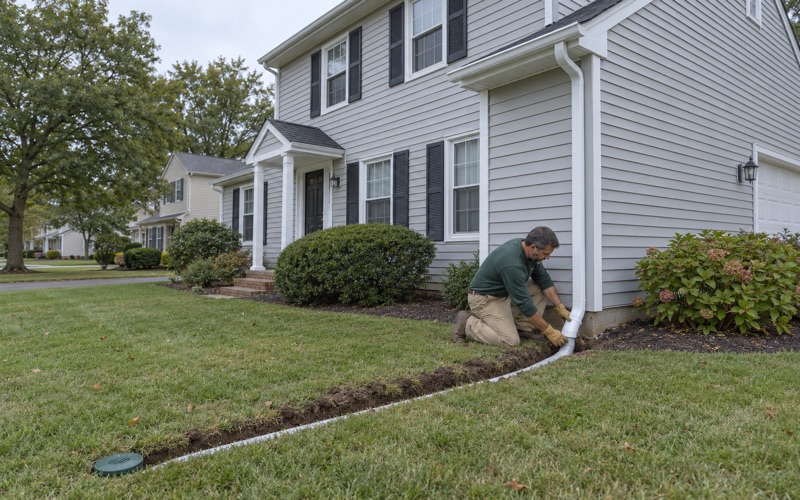
With the sanitary sewer off the table, roof water in Belmar has to be handled on the property. On most lots that means a downspout extension that carries water away from the foundation, an underground downspout line to a pop-up drainage emitter in the yard, or a splash block on a spot that slopes away from the house. Which one works depends on the grade, how much paving surrounds the house and how close the river sits.
The building code gives a useful yardstick. The 2021 IRC New Jersey edition, section R401.3, calls for grade to fall 6 inches within the first 10 feet from the foundation, and many older shore lots never got that slope. When the ground near a downspout is flat or tilts toward the house, we point it out and suggest an extension long enough to clear the problem.
Old buried connections
Some older houses have downspouts that run straight into the ground, and nobody living there today knows where the pipe ends. When we replace gutters on a house like that, we show the owner the buried connection and talk through the options rather than guess. If the owner wants it redirected to an above-ground outlet, that becomes its own line on the estimate.
Downspouts on River-Side Blocks
Sizing for the roof, not the habit
Downspouts in a flood-prone neighborhood have to move water quickly while it is falling and then stay out of the way when the ground is soaked. We size gutters and downspouts for the roof area that drains to each run, which on many Belmar houses means 6-inch K-style seamless gutters with 3x4 downspouts rather than smaller stock. A larger downspout empties the gutter faster in a downpour and clogs less often.
Placement matters as much as size. Where a long roof drains to one corner, we often split the run so water leaves the roof at two points. We pick those points so neither one empties onto a walkway, a neighbor’s side yard or the low end of the lot.
Where the water goes when the street is under water
On blocks near the river, we avoid aiming downspouts at the curb when there is any other choice. When the street is flooded, that water has nowhere to go and backs up across the sidewalk and into the yard. An extension that turns toward a lawn, a planting bed or a gravel strip gives the water a place to soak in once the river drops.
Underground downspout lines with pop-up emitters can work here, but they need enough fall and an outlet above the spot where water collects. On the lowest lots we sometimes recommend a shorter, above-ground extension that is easy to lift out of the way, because a buried line sitting in standing water does very little. We explain that tradeoff on site so the owner can choose.
Keeping downspouts clear
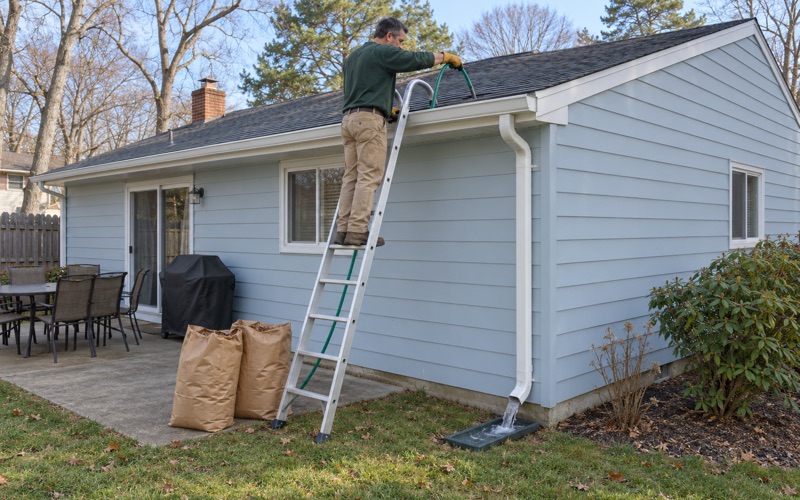
A downspout that is half full of leaves fails right when it is needed most. On every cleaning visit we flush each downspout to confirm it runs clear, then bag the debris and haul it away, so nothing ends up on the lawn or washed into the street. Guards are matched to the trees on the lot, since pine needles and oak leaves need different screens, and stainless steel micro-mesh suits many shore yards.
Gutters on Belmar’s Older Houses and Rentals
Pre-war houses and painted trim
Belmar’s housing is older than most. Of the 3,899 housing units counted in the Census Bureau’s 2024 five-year survey, 1,227 were built in 1939 or earlier, and hundreds more went up in the 1950s and 1960s. Many of those houses have wood fascia that has been painted again and again, and some have gutters that have been patched for decades.
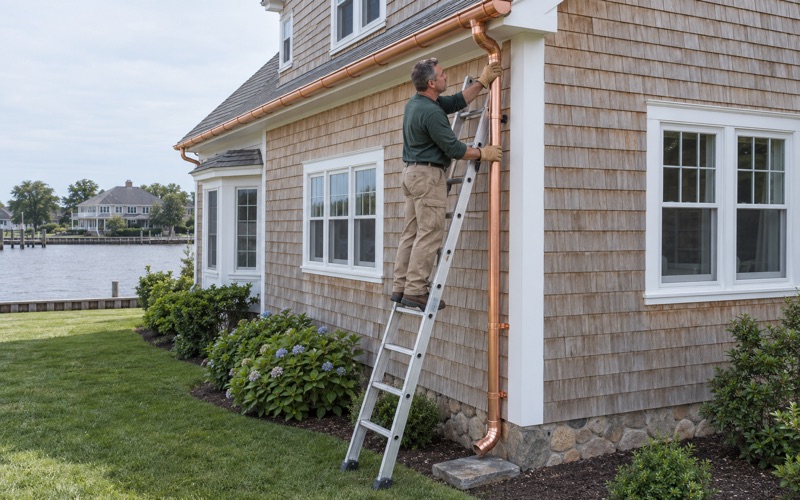
On a house built before 1978, painted fascia and trim may contain lead, so we follow the EPA Renovation, Repair and Painting rule when the work disturbs it. Where the style of the house calls for it, we can match the original look with half-round gutters in a double-bead profile or 16-ounce copper that weathers to a patina over time.
Two-unit buildings and rental houses
Belmar is also a renter’s town, with about 43 percent of occupied homes rented and hundreds of buildings holding two units. Owners who live elsewhere still need to know their gutters are clear and their downspouts point the right way. Before-and-after photos come with every cleaning and repair, so a landlord or second-home owner can see the work without driving down.
Short visits matter in a shore town where houses turn over between tenants. We plan the work around occupancy and aim to finish in a single visit when the job allows, with the downspouts tested before we leave.
Estimates and contracts
Our estimates list new gutters and repair work on separate lines, because New Jersey taxes them differently: a new system is an exempt capital improvement, while a repair is taxable. Contracts follow the state’s home improvement rules, including the three-day cancellation notice, so owners know exactly what they are signing.
Whether the house sits a block from the marina or farther from the river, the goal stays the same: water off the roof, away from the foundation and out of the sanitary sewer. Call Brick Quality Gutters to set up a visit, and we will walk the lot with you before we write anything down.
- 20+ Years Experience
- Free Written Estimates
- Before-and-After Photos