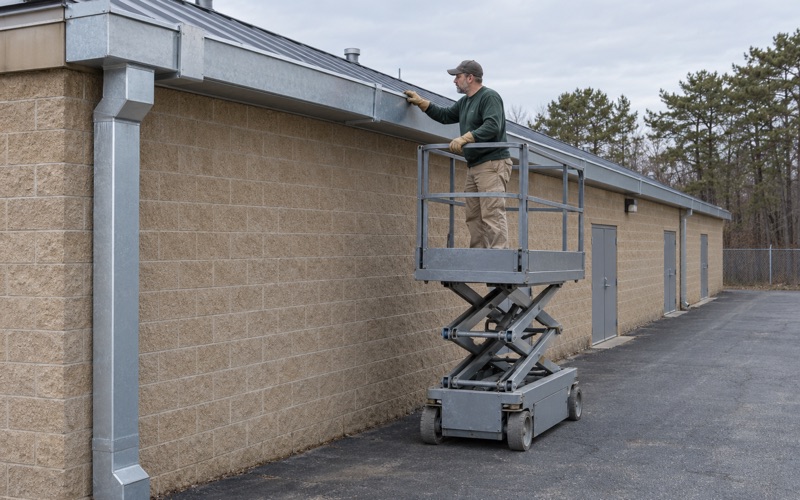
Brick Quality Gutters has spent more than 20 years installing and repairing gutters in Aberdeen and the surrounding part of Monmouth County. On a gutter job here, the question we ask first is not which color the homeowner wants. It is where the water from each downspout ends up once it leaves the roof.
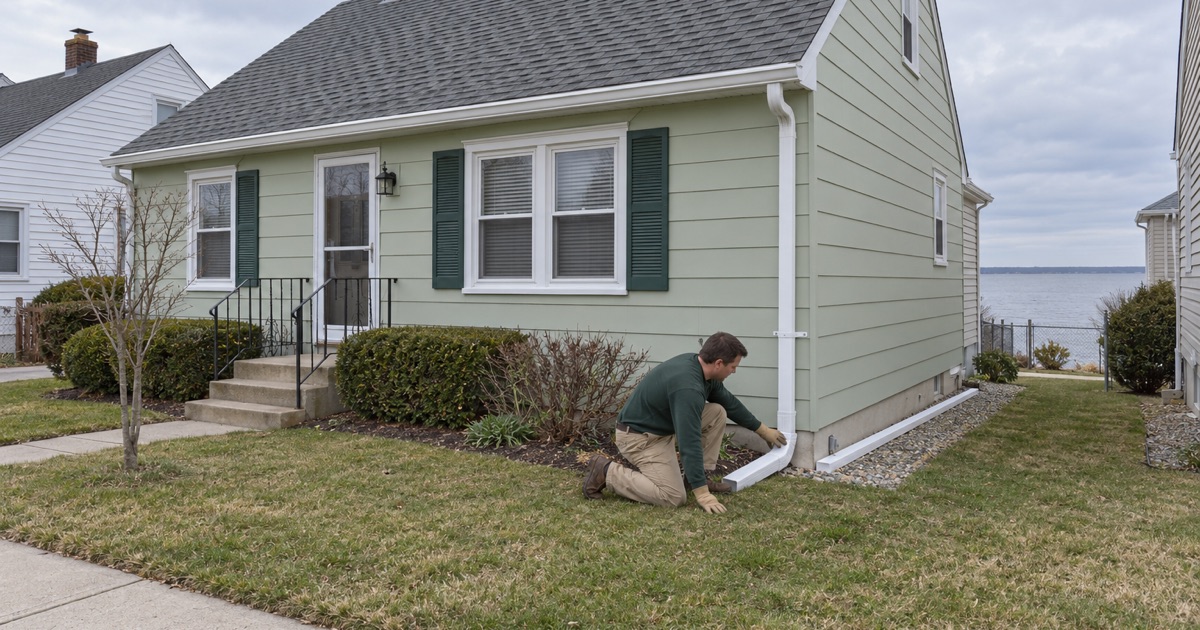
That question matters because a gutter system only moves water from one place to another. If the run is sized right but the downspout empties against the foundation, onto a neighbor’s yard or across a walk, the job is not finished. We follow each downspout to the spot where its water lands and propose an extension or an underground line when the answer is a wall.
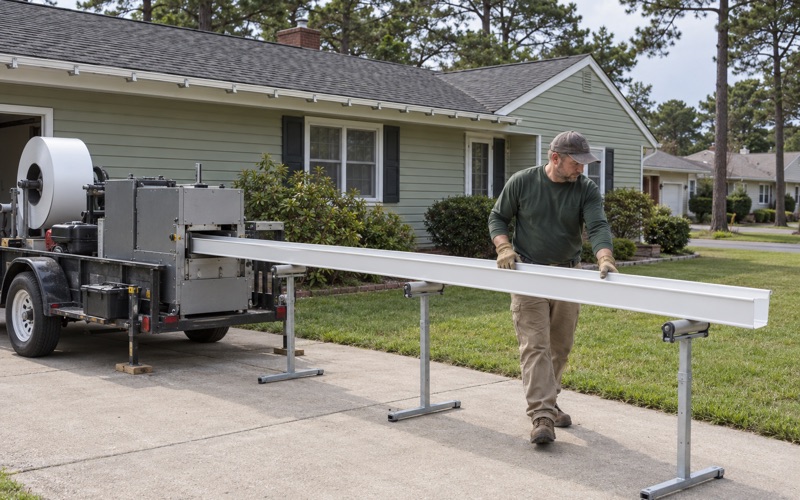
We form seamless gutters on site from coil, one piece for each run of the house, and we size each gutter and downspout for the roof area that actually drains to it. Repairs and new installations go on separate lines of the estimate, and our contracts are written to New Jersey’s home improvement rules, three-day cancellation notice included.
Gutters and Downspouts for Raritan Bay Homes in Aberdeen
Aberdeen Township’s waterfront is Raritan Bay, not the Atlantic. The township’s January 2013 recovery planning report describes about 2 miles of bay shoreline, and Rutgers’ Center for Urban Policy Research calls Cliffwood Beach a shoreline that has become increasingly vulnerable to wave overwash and erosion. That shapes our gutter work in a quieter way than people expect.
A Bay Shore Where the Trouble Sits on the Ground
The Rutgers case study describes a stretch bounded by a jetty at Whale Creek to the west and a seawall to the east, with Ocean Boulevard and Veterans Memorial Park the features most immediately threatened. It also notes that the Raritan Bay shoreline is developed with homes and is vulnerable to erosion and flooding made worse by rising sea levels. On the lower bayside streets, water collects at ground level long before it does damage anywhere else.
So on many Aberdeen houses, the gutter itself is the easy part. The harder decisions are about the last few feet: how long the extension runs, which way it points, and whether the ground beneath it can take the water. A gutter that catches every drop and then dumps it into a low corner of the yard has only moved the problem.
Sizing Runs for the Roof Behind Them
We size gutters for the roof area behind each run instead of using one size out of habit. A long rear slope on a two-story Colonial can push far more water into one corner than the short front run beside the garage. On those runs we often recommend 6-inch K-style seamless gutters with 3x4 downspouts, formed on site from .032 aluminum coil.
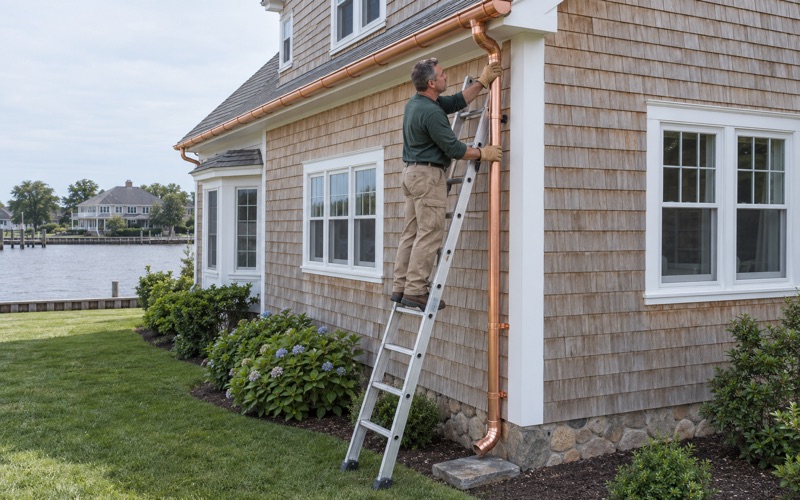
Seamless runs cut down on the joints where leaks start, and the corners get box, strip or bay miters depending on the shape of the house. We choose wide-flange outlets where a heavy run needs to empty fast. On older homes where the style calls for it, we also match half-round gutters with a double-bead profile, or 16-ounce copper, to the age of the house.
Looking for gutters closer to Robbinsville? See Gutters Services in Robbinsville.
Where Aberdeen Lets Roof and Sump Water Go
Aberdeen has put its drainage expectations in writing for homeowners, and that notice shapes how we plan a downspout here. The township’s Sump Pump Drainage notice, dated January 29, 2019, opens with the general property maintenance rule that drainage of roofs and paved areas, yards and courts, and other open spaces shall not be discharged in a manner that creates a public nuisance.
What the Township Notice Says
The notice says groundwater collected by a sump pump must be discharged to the ground surface outside the building, to a storm drain or to a sump pump collection system. It warns that sump pump discharge onto township streets creates algae buildup in the warm months and serious icing on the streets in winter. It also says that extending a sump pump hose across the public sidewalk is prohibited, because it obstructs the walking path.
The same notice states that discharging sump pump water into the sanitary sewer is illegal under Township Revised General Ordinance 16-62.4. It adds that water flowing across a property line can become a nuisance for neighbors, and that any discharge of water onto a public street is the property owner’s responsibility to abate. We cite the notice here rather than the ordinance, because the ordinance text itself was not part of what we reviewed.
Applying the Same Thinking to Downspouts
The notice is written about sump pumps, not gutters. Still, the reasoning carries over to roof water: a downspout extension piped straight to the curb sends the same water to the same street. When we plan a new system, we try to keep roof water on the owner’s own ground, away from the foundation and short of the property line.
Where a house has both a sump pump and downspouts on the same side, we look at the two discharge points together. Two outlets aimed at one low spot can overwhelm it, and a line that crosses the walk to reach the gutter line is the very hose the township describes. We would rather spread the water across the yard than stack it in one place.
Keeping Water Off the Street and Sidewalk in Winter
The icing warning in the notice is the part homeowners feel most. A downspout that empties onto a driveway apron or a walk can freeze into a sheet of ice overnight, right where people step out of the car. We look for those outlets on winter repair calls and on fall cleaning visits.
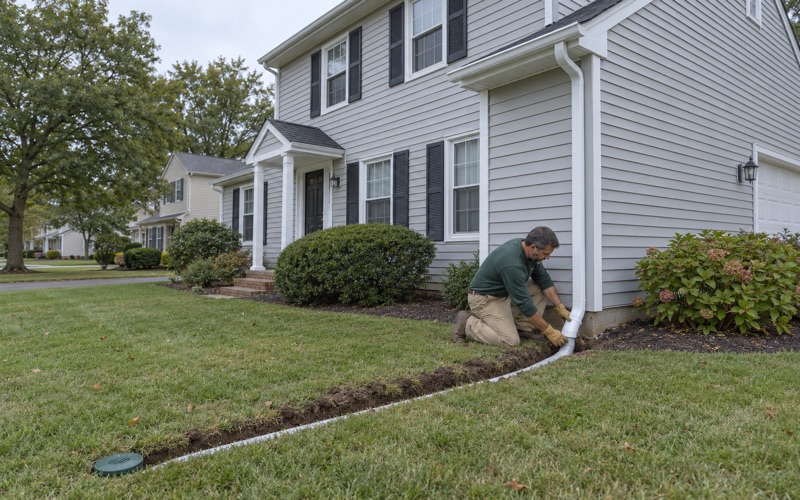
The fix is usually simple: turn the outlet, add an extension that ends in the lawn, or run an underground line to a pop-up drainage emitter. Under the 2021 New Jersey edition of the IRC, section R401.3, grade should fall 6 inches within the first 10 feet from the foundation. That slope is what lets an emitter or extension carry water away instead of letting it pool against the wall.
Downspout Extensions and Drain Lines on Low Cliffwood Beach Lots
Cliffwood Beach began in 1923 as a resort community of summer bungalows, and the lots near the bay still sit low. When Sandy came through on October 29, 2012, the township’s recovery report recorded that flooding isolated significant portions of the Cliffwood section, including areas near Lakeshore Drive, Amboy Avenue and Route 35.
Why Low Ground Changes the Plan
The same report found that most substantially damaged properties in Aberdeen were in the Cliffwood Beach area and along Matawan Creek. It also noted that the bayfront dunes were reduced from ten feet in height to two. On ground that low, where a downspout empties decides whether roof water adds to the water already standing against a foundation.
That is why we do not treat extensions as an afterthought in this part of town. On a flat lot, a short splash block may do almost nothing, and a long line may simply move water to a lower corner. We walk the yard with the owner and look at where water sits after rain before we suggest any route.
Choosing Between Extensions, Lines and Emitters
Above-ground extensions are the least expensive option and the easiest to adjust, though they get stepped on and moved by mowers. Underground downspout lines tuck the pipe out of sight and end at a pop-up emitter that opens under flow and closes when the rain stops. Each works only if the ground beyond it is lower than the foundation.
On a low lot where the yard has no real slope, we tell the owner honestly that a drain line cannot create grade that is not there. In those cases, we may recommend spreading the discharge between several outlets rather than piping all of it to one spot. We never propose sending a line to the street, onto the sidewalk or into a sanitary connection.
Bungalows, Additions and Odd Rooflines
Houses that have been expanded over the decades often carry rooflines that change direction more than once. Additions often create valleys that dump a concentrated stream of water into one short gutter. We check those spots for gutter apron, drip edge and kickout flashing, because a missing kickout lets water run behind the siding where a wall meets a lower roof.
Guards are matched to what falls on the lot, since pine needles call for a finer screen than oak leaves. Stainless steel micro-mesh gutter guards suit yards with fine debris, while other screens handle broad leaves. A guard is only worth installing if the downspout below it is also clear and draining to the right place.
Gutter Repair After Wind: Fallen Gutters, Soffits and Fascia
Wind is the other reason we get calls in Aberdeen. On May 20, 2022, the National Weather Service in Mount Holly confirmed a brief EF-0 tornado, with an estimated peak wind of 85 mph, that began along Line Road on the Strathmore-Hazlet border.
What the 2022 Survey Recorded
The survey traced a path of about 0.8 miles and found the most significant damage between Sophia Drive and Carlow Way. At least a dozen homes in that area had cosmetic damage to siding, soffits, gutters and shingles, and one fallen tree caused structural roof damage. The survey did not map which of those homes lie in Aberdeen and which lie in Hazlet.
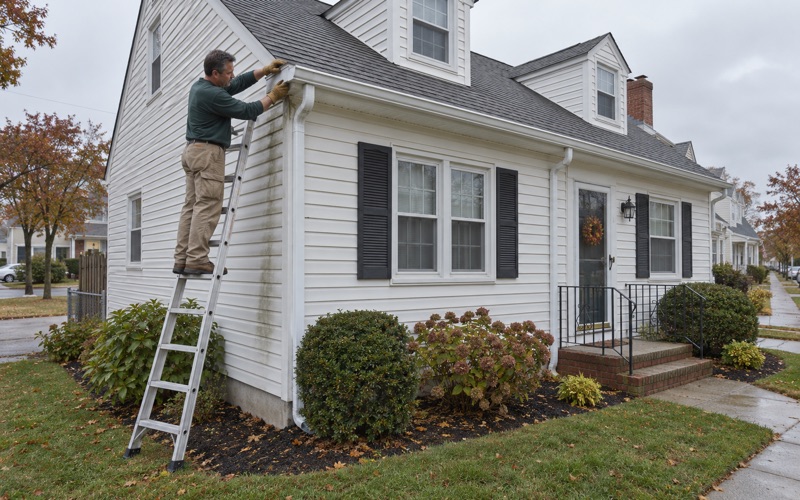
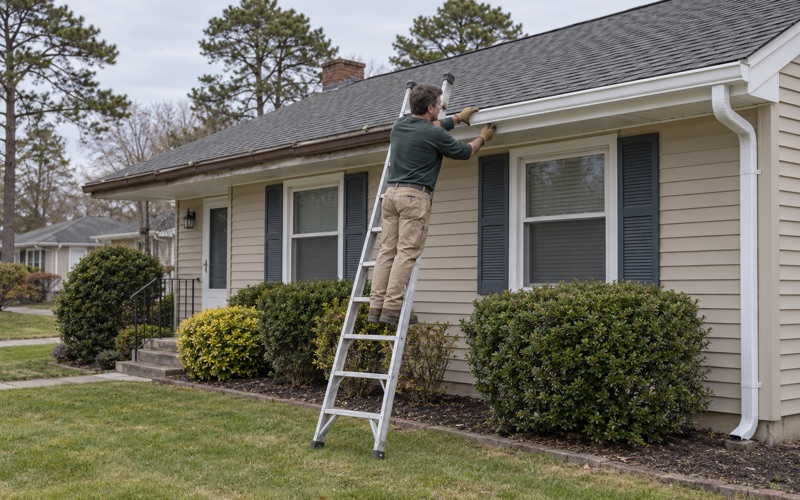
What it does show is the typical pattern after a strong gust. A gutter pulls away at the hangers, the soffit beside it loosens, and water then runs behind the fascia board. A quick repair that reattaches the gutter without checking the board behind it often fails the next time the run fills with water.
The Fascia Check Before New Gutters Go Up
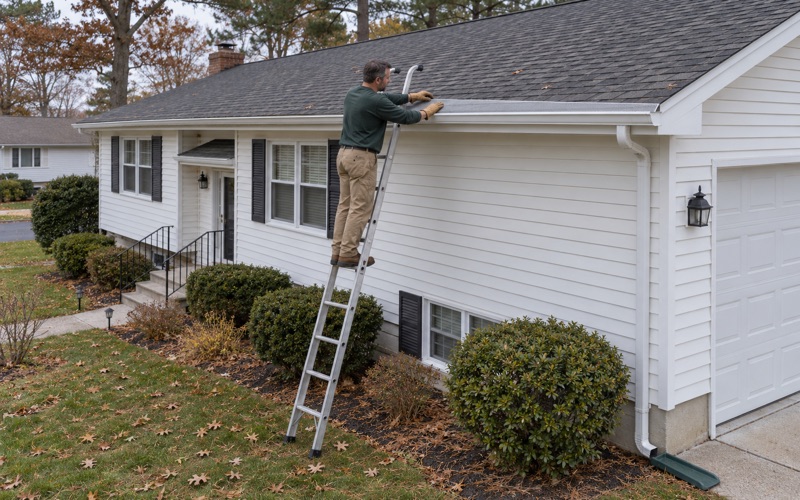
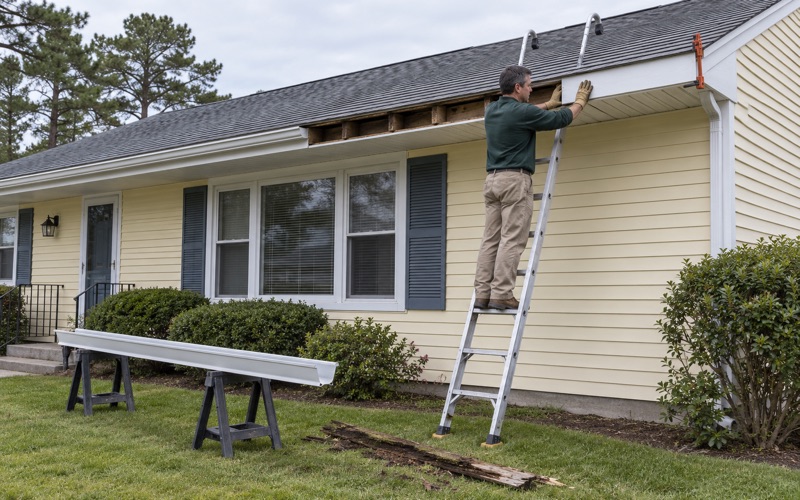
Before we hang new gutters, we check the fascia behind them for rot. When we find soft wood, we show it to the owner before we replace it, so nobody pays for a board they have not seen. On houses built before 1978, painted fascia and trim fall under the EPA Renovation, Repair and Painting rule, 40 CFR 745, which changes how that wood is handled.
We reattach gutters with hidden hangers rather than spike and ferrule, since spikes tend to back out of the fascia over time. Joints and end caps are sealed with tripolymer gutter sealant. Under N.J.A.C. 5:23-2.7(c)1.xvi, repairing, replacing or installing exterior gutters and leaders counts as ordinary maintenance, which matters when an owner asks whether the work needs a construction permit.
Cleaning Visits, Photos and Paperwork
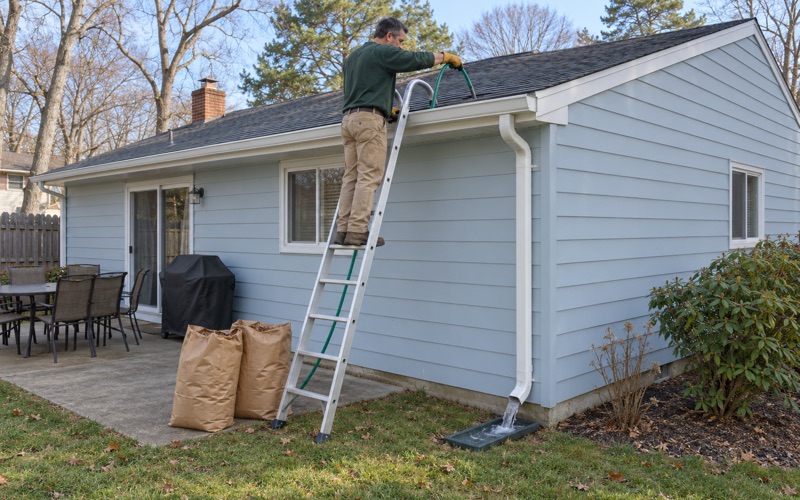
On a cleaning visit, we flush each downspout, then bag the debris and haul it away. Nothing is left on the lawn or in the street, and the downspouts are running clear before we leave. Before-and-after photos come with every cleaning and repair, a help for owners of rental houses who are not on site.
Aberdeen has 2,228 renter households, many in buildings of ten or more units, and gutters there belong to the landlord or the association. In adult communities and associations, we check the master deed or management office first so the owner knows who is responsible. On estimates, new gutters and repair work sit on separate lines, because New Jersey treats new gutters as an exempt capital improvement and gutter repair as a taxable repair.
- 20+ Years Experience
- Free Written Estimates
- Before-and-After Photos